Essays and interviews from the nine print issues of the journal Mondes du Cinéma
Essais et entretiens tirés des neuf numéros de la revue Mondes du Cinéma

Mondes du Cinéma
Le vidéaste et critique Mounir Alloui fut à l’origine de la revue Mondes du Cinéma, créée en 2012 aux éditions Lettmotif, maison fondée par le graphiste Jean-François Jeunet, frère du cinéaste Jean-Pierre Jeunet. Cet éditeur se consacre exclusivement aux ouvrages sur le cinéma mais à cette époque, après des échanges avec Mounir Alloui, le projet d’une revue qui allait aborder le cinéma, la télévision, la vidéo en tant qu’art contemporain et support de documentaires, fut accepté. D’emblée, le Japon y occupa une place importante et je fus contacté par Mounir pour un entretien qui paru dans le premier numéro et un essai dans le second. Je devenais co-rédacteur-en-chef avec le troisième.
Nous avons par la suite élargi le concept de ‘mondes’ en invitant des critiques internationaux, des artistes, des chorégraphes, des écrivains, à proposer des textes sur l’image. Nous avons également pris compte de l’évolution des installations et de l’arrivée du cinéma installé, auquel Raymond Bellour s’intéressait dans des ouvrages tels que L’Entre-Images et La Querelle des Dispositifs, et sur lequel la revue posait un autre regard.
La revue comprenait deux parties, une première portant sur une thématique ou sur des artistes et/ou cinéastes précis.e.s. Mounir concevait la seconde qui avait pour titre Kaleidoscope, consacrée au cinéma, au documentaire, à la vidéo provenant du Maghreb, du Moyen Orient, de la Réunion, les Comores. Le critique Jean-Michel Frodon, spécialiste du documentaire et de Hou Hsiao Hsien, fut un repère pour les objectifs de cette partie.
Mounir Alloui et moi nous retrouvions sur la vidéo, le media art, et le cinéma japonais. Mondes du Cinéma se démarquait par cette singularité: une revue sur l’image en mouvement, publiée en France, dont les sommaires étaient établis entre La Réunion et le Japon. Le numéro 10 devait aborder l’oeuvre d’une figure pionnière de la video et du media art, John Sanborn. La proposition fut refusée et l’éditeur nous annonça que la revue s’éloignait trop de son projet. Le livre Méandres et Medias prit le relais de ce travail sur Sanborn. La collaboration avec Lettmotif se termina avec le numéro 9 en 2016.
Entre 2017 et 2018, je me suis entretenu avec trois éditeurs en France qui avaient apprécié la revue et qui pouvaient imaginer une publication semblable, avec des modifications qui m’ont paru discutables. Le troisième sur cette liste se montra plus réceptif à la spécificité de ce qu’avait été Mondes du Cinéma et prit la décision de faire un pas de l’avant. Puis vinrent ceux de l’arrière, à retenir ne serait-ce que pour souligner la fragilité des tirages et leurs risques. Depuis Mounir Alloui et moi discutons de modèles possibles pour que la revue, ses archives et de nouveaux textes, puisse exister en ligne. Et qu’elle ne soit pas tributaire que d’un seul site.
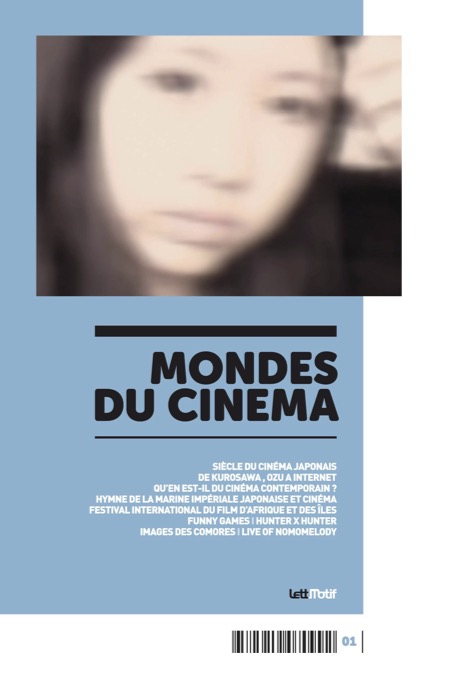
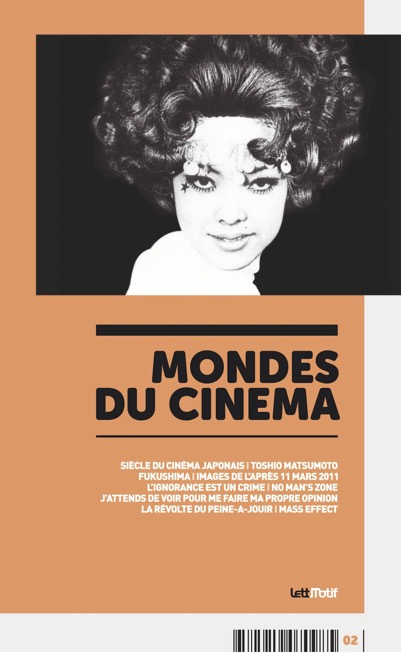
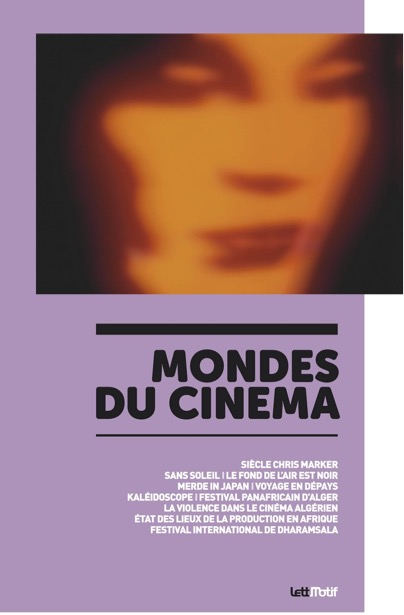
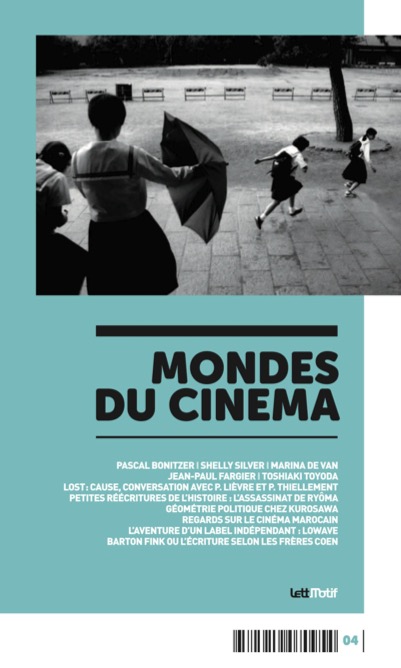
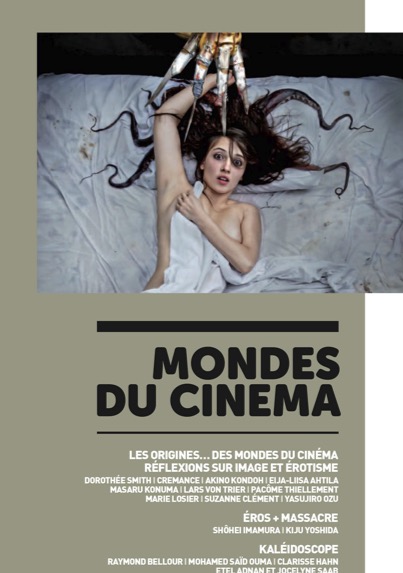

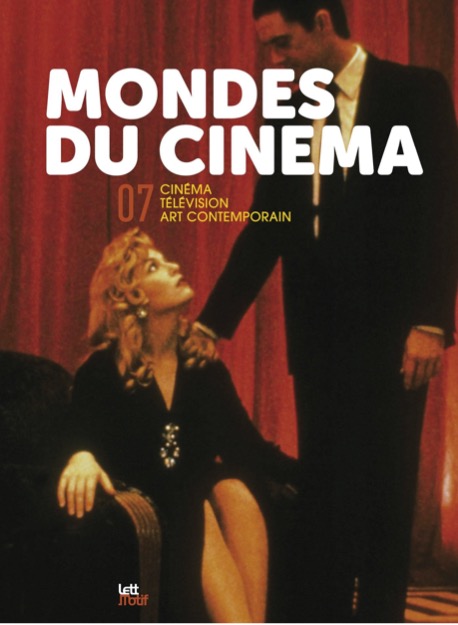

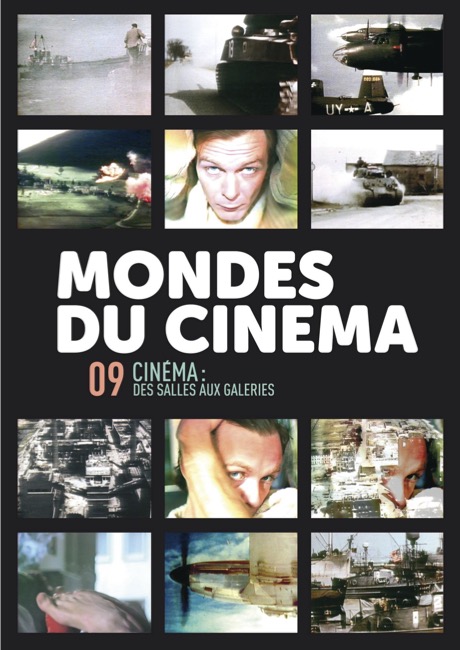
The video artist and critic Mounir Alloui was at the origin of the journal Mondes du Cinéma, created in 2012 at Éditions Lettmotif, a publishing house founded by the graphic designer Jean-François Jeunet, brother of the filmmaker Jean-Pierre Jeunet. This publisher dedicates itself exclusively to books on cinema, but at that time, following exchanges with Mounir Alloui, the project of a journal that would address cinema, television, and video as contemporary art and documentary medium was accepted. From the outset, Japan occupied an important place, and Mounir contacted me for an interview that appeared in the first issue and an essay in the second. I became co-editor in chief with the third.
We subsequently broadened the concept of ‘worlds’ by inviting international critics, artists, choreographers, and writers to propose texts on the image. We also took into account the evolution of installation practices and the emergence of installed cinema, which Raymond Bellour was addressing in works such as L’Entre-Images and La Querelle des Dispositifs, and on which the journal cast a different light.
The journal comprised two parts: the first focused on a theme or on specific artists and filmmakers. Mounir conceived the second, titled Kaleidoscope, devoted to cinema, documentary, and video from the Maghreb, the Middle East, Réunion, and the Comoros. The critic Jean-Michel Frodon, a specialist in documentary and in Hou Hsiao-hsien, was a reference point for the objectives of this section.
Mounir Alloui and I found common ground in video, media art, and Japanese cinema. Mondes du Cinéma was distinguished by this singularity: a journal on the moving image, published in France, whose editorial decisions were made between Réunion and Japan. Issue 10 was to address the work of a pioneering figure in video and media art, John Sanborn. The proposal was refused and the publisher informed us that the journal was straying too far from his project. The book Méandres et Médias took over this work on Sanborn. The collaboration with Lettmotif ended with issue 9 in 2016.
Between 2017 and 2018, I spoke with three publishers in France who had appreciated the journal and could imagine a similar publication, with modifications that struck me as questionable. The third on this list proved more receptive to the specificity of what Mondes du Cinéma had been and took the decision to move forward. Then came the steps backward — worth noting if only to underline the fragility of print runs and their risks. Since then, Mounir Alloui and I have been discussing possible models for the journal — its archives and new texts — to exist online. And for it to not be dependent on a single site.
 constance-mdc