Cahiers du Cinéma- site web
Entre 2005 et 2009, j’ai tenu une chronique consacrée au cinéma japonais moderne et contemporain ( soOtaku) sur le site de la revue Cahiers du Cinéma, alors rattachée au groupe du journal Le Monde. Le rédacteur en chef du site était Laurent Laborie. J’étais alors le correspondant à Tokyo de la revue. Elle était le versant plus ‘ludique’ d’une chronique précédente, No-Otaku, qui remonte au tournant du millénaire, pour Objectif Cinéma, que menait Bernard Payen de la Cinémathèque Française. Lors du rachat des Cahiers par l’éditeur Phaidon, un nouveau site fut créé et l’intégralité du contenu précédent effacé. Une partie de ces textes fut reprise dans Réponses du cinéma japonais contemporain (Lettmotif, 2014).
Between 2005 and 2009, I wrote a column on modern and contemporary Japanese cinema (soOtaku) for the website of Cahiers du Cinéma, at that time part of the Le Monde newspaper group. The website’s editor-in-chief was Laurent Laborie. I was then the magazine’s Tokyo correspondent. It was the ‘brighter’ version of a previous column, No-Otaku, at the turn of 2000, for Objectif Cinéma, led at the time by Bernard Payen of the Cinémathèque Française. When Cahiers was sold to the publisher Phaidon, a new website was created and all previous content erased. A selection of these texts was later published in Réponses du cinéma japonais contemporain (Lettmotif, 2014).

MUBI Notebook
J’ai rencontré Efe Çarakel, fondateur de MUBI, à Tokyo en 2008, dans un bar à vin d’Azabujuban. Nous avons discuté du projet Notebook, qui proposerait critiques de films et chroniques sur le site. On m’a proposé d’y tenir une chronique sur le cinéma japonais. Je l’ai intitulée 勝手にしやがれ — ce qui se traduit par « va te faire foutre » — le titre japonais du film de Jean-Luc Godard, À bout de souffle. C’était ma première expérience d’un accès immédiat aux commentaires sur un texte. J’étais ravi que la plupart soient positifs, mais j’avais écrit un court texte sur un court métrage de Hayao Miyazaki qui, à l’époque, n’était projeté qu’au Musée Ghibli. Cela provoqua chez une lectrice une colère et une indignation face à mes détails factuels, à un niveau que je n’avais jamais rencontré en tant que critique. J’avais déjà interviewé Miyazaki et Isao Takahata, et je connaissais plusieurs personnes au Studio Ghibli, qui m’avaient fourni les informations utilisées dans le texte. J’ai demandé à Daniel Kasman, rédacteur en chef de Notebook — qui s’y trouve toujours —, si nous pouvions supprimer la section des commentaires. La réponse fut non, et j’ai tourné la page ; pourtant, au vu du travail extraordinaire accompli depuis plus de quinze ans, j’aurais dû « affronter », pour reprendre la notion d’Arthur Jafa, ce que je ne voulais pas voir.
I met Efe Çarakel, MUBI’s founder, in Tokyo in 2008, at a wine bar in Azabujuban. We discussed the Notebook project, which would offer film criticism and columns on the website. I was invited to write a column on Japanese cinema. I called it 勝手にしやがれ — which translates as “do whatever the hell you want” — the Japanese title of Jean-Luc Godard’s À bout de souffle. It was my first experience of having immediate access to comments on a text. I was delighted that most were positive, but I wrote a short piece on a short film by Hayao Miyazaki that was, at the time, shown exclusively at the Ghibli Museum. It provoked in one reader an anger and indignation over my factual details at a level I had never encountered as a critic. I had interviewed Miyazaki and Isao Takahata, and knew several people at Studio Ghibli, who had provided the information used in the text. I asked Notebook editor Daniel Kasman — who is still there — whether we could remove the comment section. The answer was no, and I moved on; yet in light of the extraordinary work they have been doing for over fifteen years, I should have “confronted,” to use Arthur Jafa’s notion, what I did not want to see.

Contributions to MUBI Notebook →
勝手にしやがれ — texts
- Japanese Film & Media On Its Own Terms
- 10 Films Writing a Decade
- Rohmer, Relatively Big in Japan
- Resistance is Futile (Post-Berlin)
- The Stake — Festival du Film Français au Japon
- Mighty Mice — Hayao Miyazaki’s Chûô Zumo
- Euro Space, or Lack Thereof
- Tokyo Filmex — Where Did Japan Go?
independenciarevue.net
Peu après la fin de ma chronique sur le site des Cahiers du Cinéma, deux collègues également critiques aux Cahiers, Antoine Thirion et Eugenio Renzi, créaient la revue independencia en 2009. Ils m’invitèrent à y collaborer et j’y ai écrit de 2010 à 2012-13. Antoine Thirion a dirigé le très bel ouvrages Homes, sur l’oeuvre d’Apichatpong Weerasethakul, paru en 2024 aux éditions de l’Oeil.
Soon after the end of my column on the Cahiers du Cinéma website, two colleagues who were also at Cahiers, Antoine Thirion and Eugenia Renzi, launched independencia in 2009. They invited me to become a contributor and I wrote for it from 2010 to 2012-13. Antoine Thirion edited the remarkable volume Homes, on the work of Apichatpong Weerasethakul, published in 2024 at the éditions de l’Oeil.

eastasia.fr
Je ne sais plus en quelle année j’ai découvert le site eastasia.fr, mais la lecture de quelques critiques de films m’incita à contacter l’équipe et leur proposer une collaboration. Elle démarra autour de 2015 et devint une chronique régulière, DC MINI, jusqu’en 2025. On découvrira au cours de l’année 2018-19 quelques parutions de la chronique en compagnie de Yangyu Zhang, qui était critique et curatrice émergente. Nous avions créé s_zbureau.com , au cours de cette même période, en tant que laboratoire de concepts et projets d’expositions et de publications, avant l’arrivée de la pandémie.
Cette longue collaboration avec eastasia me permit d’étudier les profondes mutations que traversait le cinéma japonais.
I can no longer recall the year I discovered the website eastasia.fr, but reading a few film reviews prompted me to contact their team and suggest a collaboration. It began around 20115 and became a regular column, DC MINI, running until 2025. During 2018–19, a few of the column’s chapters were published in collaboration with Yangyu Zhang, who was an emerging critic and curator. We had set up s_zbureau.com during that same period as a laboratory for concepts and projects relating to exhibitions and publications, before the pandemic struck.
This long-standing collaboration with eastasia allowed me to study the profound changes taking place in Japanese cinema.
DC Mini is a column published on eastasia.fr, a French-language website dedicated to Asian cinema. Taking its name from the dream-sharing device in Kon Satoshi’s Paprika (2006), the column addressed Japanese cinema, animation, and visual culture from 2014 to 2025. Forty-six chapters appeared over that period, covering films, festivals, actors, books, and broader questions of Japanese visual culture.
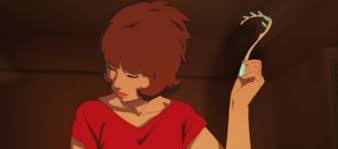
DC Mini est une chronique publiée sur eastasia.fr, site francophone consacré au cinéma asiatique. Empruntant son nom au dispositif de partage de rêves dans Paprika de Kon Satoshi (2006), la chronique a abordé le cinéma, l’animation et la culture visuelle japonaise de 2014 à 2025. Quarante-six chapitres ont paru au fil de ces années, couvrant films, festivals, acteurs, livres et questions plus larges de la culture visuelle japonaise.
Tous les chapitres de DC Mini/All DC Mini columns on eastasia.fr → http://eastasia.fr/?s=stephen+sarrazin
szbureau.com

szbureau.com was a cross-generational, transnational project that began in 2019 and ended in 2021. In collaboration with Yangyu Zhang, it consisted of curatorial activities, art and film criticism, and joint participation in international conferences.
szbureau.com était un projet transgénérationnel et transnational, lancé en 2019 et qui prit fin en 2021. En collaboration avec Yangyu Zhang, il comprenait des activités curatoriales, des textes critiques sur l’art contemporain et le cinéma, ainsi qu’une participation conjointe à des conférences internationales.
Interview with Tomoko Konoike(with Yangyu Zhang)
Barely in the ParkWang Bing: The Man Who Knows Who He Is
Out of the Blue, Left FieldOn Under the Open Sky — Interview with Director Miwa Nishikawa(with Yangyu Zhang)
On the Passing of Michel Piccoli and Jacques Rivette’s La Belle Noiseuse
Islands in the Stream: Navigating East Asia’s Content Platforms
 constance-mdc