Au cours de la semaine du 11 mai, autour de l’édition 2026 du festival de Cannes, je découvre en parcourant Le Monde et The Guardian deux articles qui ont produit dans le désordre de brèves réflexions. Le point commun entre les deux parutions souligne le rôle des influencers et la place qu’il-elle-s occupent dans la conversation contemporaine sur le cinéma. Le Monde nous montre d’ailleurs une photo en contre-plongée de quatre ou cinq représentant.e.s (j’oublie), reconnaissance Française, s’arrêtant sur leur rôle à Cannes. Meta y sera à nouveau omniprésent avec ses créateurs de contenus, pour un festival où les selfies sont interdits par son directeur. The Guardian nous parle de la revue Anglaise, sur papier, A Rabbit’s Foot, tournée vers le rêve des anciens Cahiers du Cinéma. Pas de photo de l’équipe mais une citation ou deux d’un des principaux rédacteurs, Chris Cotonou, qui énonce que pour sa génération, la présence, la sortie d’un film de Hamaguchi est plus excitante que celle d’un Coppola ou d’un Tarantino. Coppola a réalisé entre les âges de 32 et 40 ans The Godfather I & II, The Conversation, Apocalypse now. Quoi qu’on en dise, Drive my Car est à la traîne.
Et à propos de cinéma américain, ces deux articles citent les réactions à l’absence de ‘grands films de studios’ à Cannes cette année, ceci ne pouvant que signifier le retour de l’auteur. La preuve, les quatre auteurs japonais, Hirokazu Koreeda, Kiyoshi Kurosawa, Ryusuke Hamaguchi, et Koji Fukada sont tous à Cannes. À l’heure où Jane Fonda déclare sur la Croisette que le cinéma est un acte de résistance, Andy Garcia et John Travolta, qui signent respectivement leurs premiers films, apparaissent en sélection et je n’ai pas retenu laquelle.
La parole du critique est clivante dans ses analyses et ses regards. Son coeur balance lorsqu’un film à grand budget récolte l’unanimité du public, mais bat son plein quand un auteur rafle tout, de Venise aux Oscars. François Truffaut fut l’un de ces critiques particulièrement féroces. Il avait cependant eu cette phrase, ‘on n’a jamais érigé de statue à la mémoire d’un critique’. La visibilité des influencers sur les réseaux sociaux, des YouTube channels sur le cinéma, c’est la revanche du critique, du content creator.
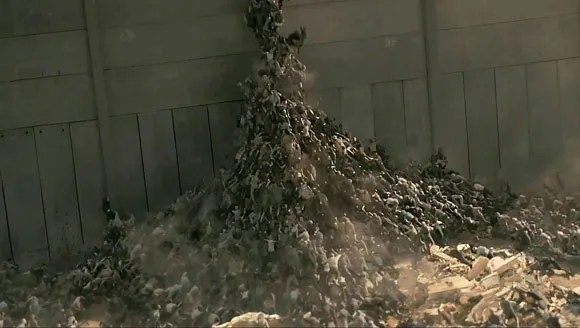
Je pense beaucoup à Arthur Jafa depuis deux, trois ans, pour un essai dont la structure peine à contenir son intelligence et sa force. Dans un échange avec le rédacteur-en-chef de la revue Artforum, David Velasco, Jafa parle de l’arrivée de Basquiat dans le milieu de l’art. Pour illustrer ce que cela représenta pour lui et son ami Greg Tate, il évoque le film World War Z, qu’il dit aimer, avec Brad Pitt. Il décrit une scène du film qui se déroule en Israel, lorsqu’un zombie grimpe le mur du périmètre. Et derrière lui se trouve un tsunami de zombies. Jafa conclut que Basquiat était ce premier zombie dans le monde l’art et que tout allait changer par la suite. Pour ces immenses artistes américain.e.s des années 80, de Barbara Kruger à Jenny Holzer, Jeff Koons, Ross Bleckner, cela semblait normal de n’avoir que Basquiat? Keith Haring et Julian Schnabel avaient répondu à cette question. Enfin, cette analogie me ramène à la Croisette, ce mur à grimper, la déferlante en ligne, dévorante. Il fut un temps où nous aurions ajouter ‘en quête de légitimité’, mais être meta a depuis longtemps dépassé cette préoccupation.
Je regardais la conférence de presse présentant le jury de Cannes cette année, une fois de plus témoigner de l’élégance et raffinement de Park Chan-wook. À ses côtés, Demi Moore terminait sa réaction à l’invitation d’être membre du Jury en nous rappelant où le festival se trouve, la mer tout près . What a view! S’exclamait-elle. Que voit-elle venir?
During the week of May 11, around the 2026 Cannes Film Festival, I came across two articles in Le Monde and The Guardian that produced, in no particular order, a few brief reflections. The common thread between the two publications underlines the role of influencers and the place they occupy in contemporary conversation about cinema. Le Monde shows us a low-angle photograph of four or five representatives (I forget how many), French recognition, pausing on their role at Cannes. Meta will once again be omnipresent with its content creators, at a festival where selfies are banned by its director. The Guardian tells us about the British print magazine A Rabbit’s Foot, oriented toward the dream of the old Cahiers du Cinéma. No photo of the team but a quote or two from one of its principal contributors, Chris Cotonou, who states that for his generation, the release of a Hamaguchi film is more exciting than one by Coppola or Tarantino. Coppola made, between the ages of 32 and 40, The Godfather I & II, The Conversation, Apocalypse Now.
Whatever one may say, Drive My Car lags behind. And on the subject of American cinema, both articles bring up reactions to the absence of major studio films at Cannes this year — which can only mean the return of the auteur. Proof: four Japanese auteurs, Hirokazu Koreeda, Kiyoshi Kurosawa, Ryusuke Hamaguchi, and Koji Fukada are all there. This when Jane Fonda declares on the Croisette that cinema is an act of resistance, Andy Garcia and John Travolta, each making their directorial debuts, appear in the selection — and I don’t remember which one.
The critic’s voice is divisive in its analyses and its gaze. The heart wavers when a big-budget film wins unanimous public acclaim, but beats fully when an auteur sweeps everything, from Venice to the Oscars. François Truffaut was one of those particularly ferocious critics. Yet he had this line: “On n’a jamais érigé de statue à la mémoire d’un critique.” The visibility of influencers on social media, of YouTube channels on cinema — it is the critic’s revenge, the content creator’s.
I have been thinking a great deal about Arthur Jafa for two or three years now, for an essay whose structure struggles to contain his intelligence and force. In a conversation with the editor-in-chief of Artforum, David Velasco, Jafa speaks of Basquiat’s arrival in the art world. To illustrate what this represented for him and his friend Greg Tate, he uses the film World War Z, which he says he loves, with Brad Pitt. He describes a scene set in Israel, when a zombie climbs the perimeter wall. And behind him is a tsunami of zombies. Jafa concludes that Basquiat was that first zombie in the art world, and that everything would change thereafter. For those immense American artists of the eighties — from Barbara Kruger to Jenny Holzer, Jeff Koons, Ross Bleckner — was it normal to have only Basquiat? Keith Haring and Julian Schnabel had responded to that question. Finally, this analogy brings me back to the Croisette — that wall to climb, the devouring online wave. There was a time when when we might have added something about a quest for legitimacy, but being meta has long since done away with this preoccupation.
I was watching the press conference presenting this year’s Cannes jury, once again witnessing the elegance and refinement of Park Chan-wook. Beside him, Demi Moore finished her response to the invitation to serve on the jury by reminding us where the festival is located — the sea close by. “What a view!” she exclaimed. What does she see coming?
 constance-mdc