Slowly but surely, the work of Idemitsu Mako found allies in Japan who would engage in having it rediscovered and, more importantly, locate it in a number of ways contemporary art history was being narrated. From being there at the emergence of an international feminist art practice to finding its place in Japan’s own art history.
Which is not to say that this is the locus of this exhibition. The sensitive and sophisticated arrangement of Idemitsu’s work – from her films of the seventies, her seminal videos of the eighties, the broader projects of the nineties, to the overtly autobiographical installations of the early 2000s – does not stray too far from the story the artist has told. It consists of radical decisions and epic encounters, most ‘tellingly’ going to America as a young woman, marrying the painter Sam Francis, being thrown out of the family by her father, becoming a mother and living between the US and Japan, picking up a 16mm camera, then a video camera, to look at what was around her. Which meant what was nearby.
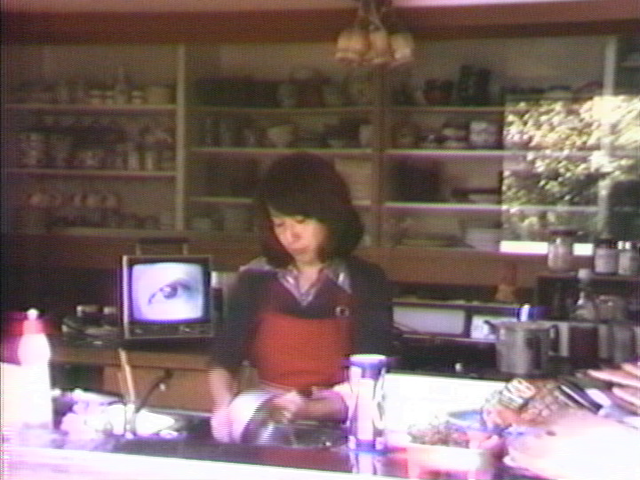
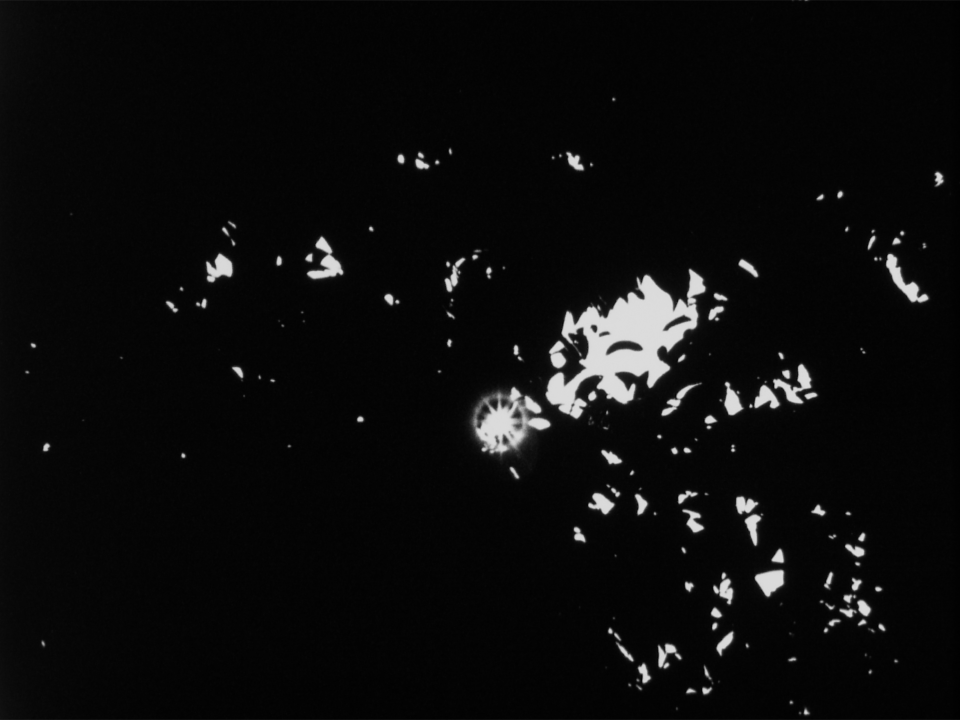
The exhibition has the particular merit of introducing many of her early films to a young audience, even though they are digitized and are cheated out of their medium’s process. But by contrast to what would later follow, they go outside. We see clouds, sunsets, trees, the use of slow motion, and an organic use of the black and white image in 1974’s At Yukigaya 2 (where she lived in Tokyo) and 1975’s at Santa Monica 3. The California environment, the support of artists like Bruce Connor, took her out of the house. However, What a Woman Made (1973) came during a visit to Japan. Rather than continue to seek escape and solace, her work began to point at the problem and fight back, though it still enjoyed going out and adding clouds and gardens to her encounters with feminism .
Not too long after this, she became an artist of interiors, telling us about the trappings of women caught in marriage, in a home, under constant peer pressure. She also became a writer, a director who worked with performers, an archivist of unfulfilled torments and longings, of projected desires.
Critics in Japan made much of what they termed the Mako style, as exemplified in 1977’s Another Day of a Housewife, in which a small monitor -they would get bigger- appears in the frame, a trope that took on different character roles throughout her work of the 80s. Dialogue with the medium defined much of video art history in its first decades, from Paik to Campus to Graham.
But Idemitsu Mako anticipated the omniscient social role it would play, how screens spoke back to us.
These works also function as a scathing critique of the bubble years, of the assignation of roles to women as housewives and men as providers and keepers of power. In this respect, it is odd that essays in the truly wonderful catalogue for the show rely so intently on interviews with the artist through the years. Carl Jung, a seventies California reference, is repeatedly quoted, from the Animus to the Great Mother. A case could be made here for readings using Freud or Lacan, but that just adds to the problem. Not invoking Judith Butler, Monique Wittig, Luce Irigary, Vinciane Despret, or Ueno Chizuko, in this project, offers new opportunities to another generation of writer-curators to engage with her work.
Nonetheless, the experience of going through the exhibition, from the opening declaration made by What a Woman Made to the closing reassessment of family history in 2004’s The Past Ahead, is moving, poetic, and powerful. It also tells the tale of where she ultimately decided to stay and make work.
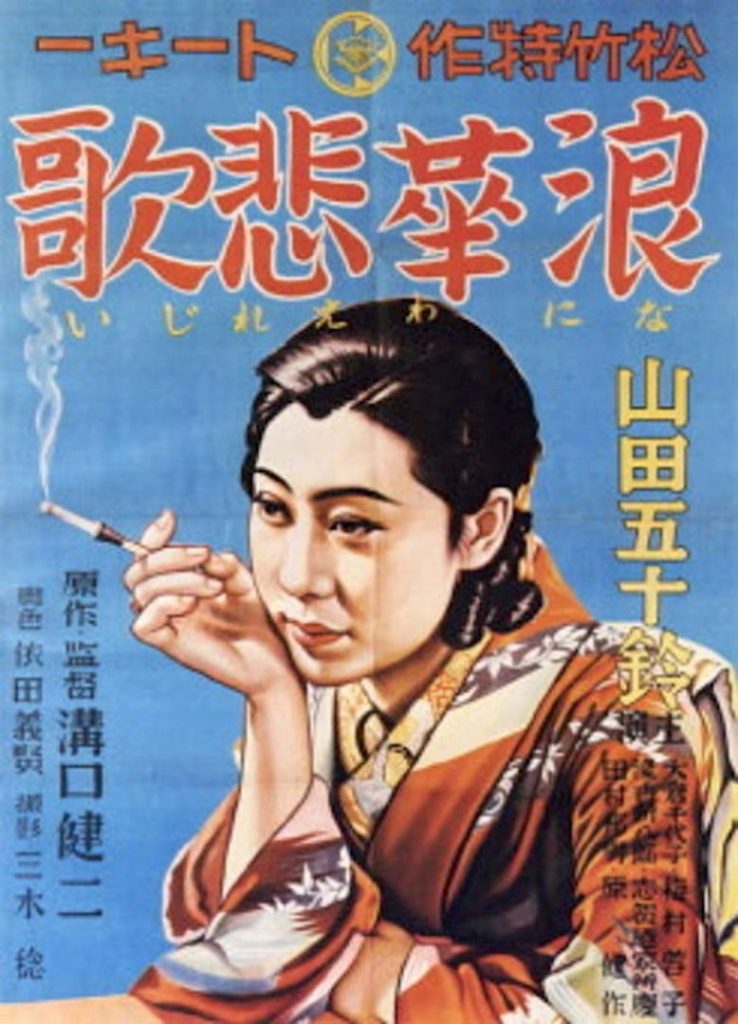
News of Akihiro Miwa’s passing closed a week that also saw the government cutting the budget for the National Film Archive of Japan by 40%. My colleague Aaron Gerow already explained that the NFAJ was expected to earn more on its own, caught as it is between the message sent about public funding and the absence of tax breaks for larger donations (1). It is difficult to imagine how it can continue to operate with an even smaller budget. Its attractive location in Kyobashi, next to Ginza, is less attuned to the current zeitgeist in the area, all about tourism and extreme shopping. Yet the Kabuki-za feels eternal, as does Shochiku a few steps away.
The NFAJ might have looked in the past to the Cinémathèque Française as a model, or even the more modest Swiss Film Archive in Lausanne, founded by Freddy Buache. But one might suggest the curatorial relevance of its programming did not encourage a renewal of its audience, in spite of seminal screenings such as those in ‘Films made by Women’. Nonetheless, it stood as one of the very few spaces in Japan where an audience could get a sense of why Japanese film history continues to resonate internationally. But that audience isn’t in Kyobashi, even when it had a film school as its neighbor for decades. What to make then of such a denial of black & white cinema?
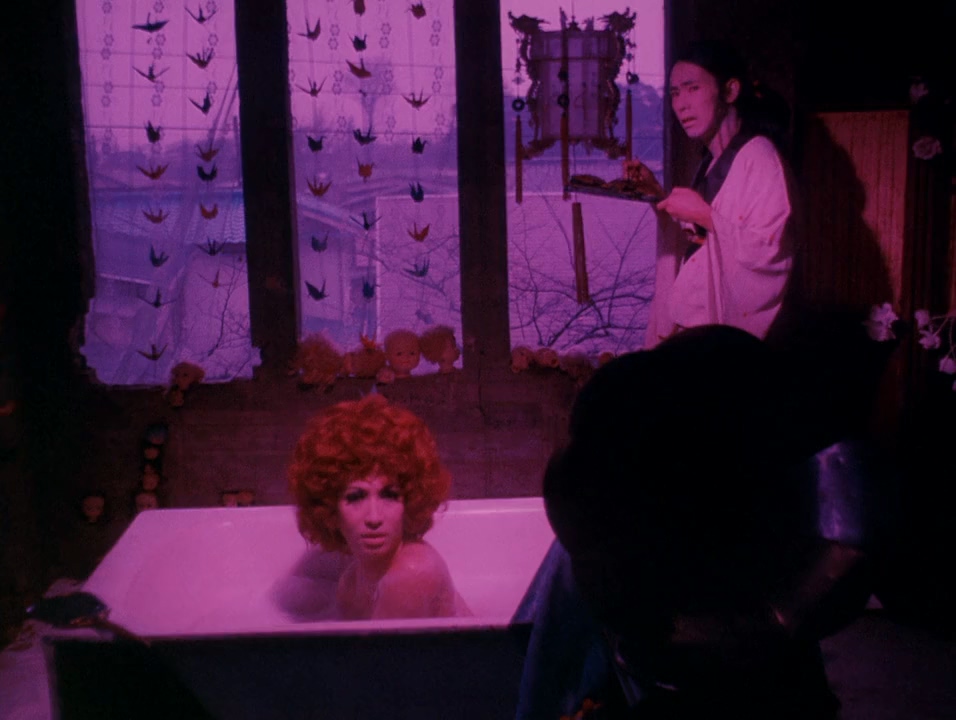
By contrast, it is impossible to think of Miwa, who passed away at 91, in anything else but color. I first met him at the start of his collaboration with Miyazaki Hayao, for an interview in 1997. I was hoping to include discussion of his work with Fukasaku Kinji, Terayama Shuji, his fabulous albums of the sixties and seventies. But I was asked to keep it to Princess Mononoke. I would meet him several times afterwards, notably in the context of Japan celebrated by France, in Japan; various television portraits of her followed on French tv networks. I may dig out that first, pre-internet, conversation. Perhaps the NFAJ will try to program a retrospective of how Miwa navigated his way through Japan’s film history.
1-Aaron Gerow also posted that the ArchiveI will try to make up some of the loss through crowd funding. They are aiming for 100 million yen (about 620,000 dollars). Here’s the link:
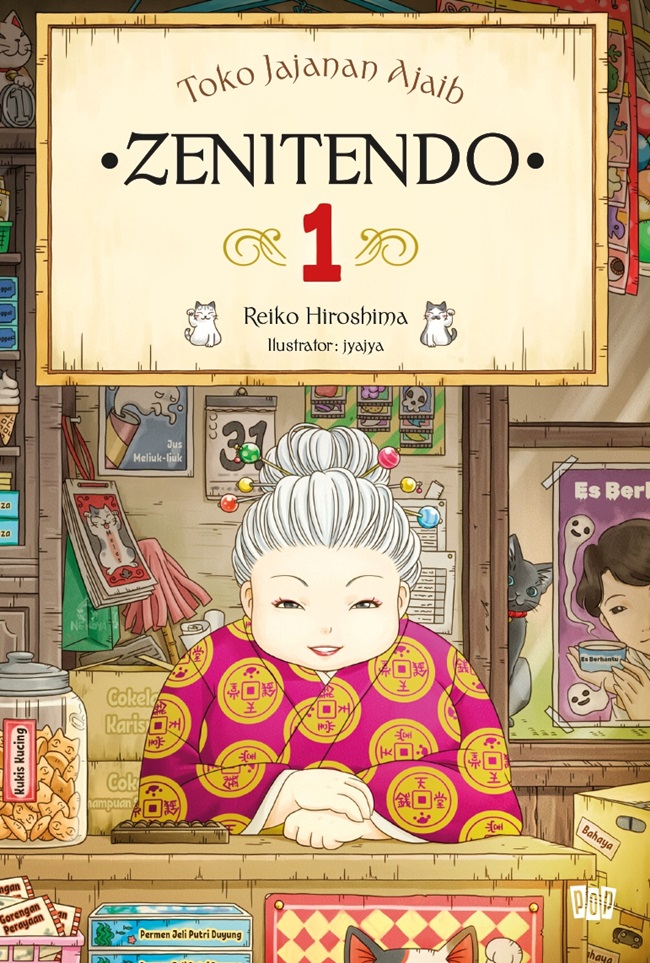
Reiko Hiroshima, Curry Barker, the first a Japanese writer whose Fushigi Dagishaya Zenitendo is a book series published since 2013, adapted to manga and anime, and the second, an American YouTube content creator whose first feature film Obsession is one of two American films (1) rewriting Summer movie rules at this particular moment in film history. Tellingly, this is happening when the power of studios, having undergone a 21st century existential trauma with the emergence of streaming, is now experiencing the full assault of acquisition and merger politics. By comparison, Amazon’s purchase of MGM appears almost civil. Obsession might almost feel like an act of resistance, were it for the fact that it blossomed in the fields of Google.
I spend time there as well, I subscribe to various YouTube channels. I used to watch the Criterion Closet when filmmakers and actors with a connection to cinema came in to select titles. Some entered with expected choices, others more surprising, and there were those who spoke knowingly, movingly about specific films. I remember the modesty of Cilian Murphy asking if he could take the Wes Anderson box set. But more recently, I am either clueless as to who the guest is, or unable to watch through because how many times can the same Albert Brooks (whom I often confuse with Charles Grodin) title be their go-to movie. Possibly more the point, a new cinephilea is being recorded here by 21st century media figures who pick a Coen Brothers film and one of the few contemporary comedies released on Criterion, usually Amy Heckerling’s (1982…) Fast Times at Ridgemont High with 22-year old Sean Penn. This when Obsession is up against a Jon Favreau film and the attempt, as pleasant as he might be, to make him an auteur because like Lucas he knows Kurosawa films. I bring this up as a possible archival strategy, the one built in small spaces as opposed to warehouses, the closet at Criterion, the bedrooms with background neons and Shure microphones of YouTube movie reviewers. Nothing similar ever took place in Japan for cinema, where Tokyo, once one of the truly great cities showing international films all year round, glided easily at the turn of the century towards film amnesia rather than immemory, starting with its own breathtaking film history.
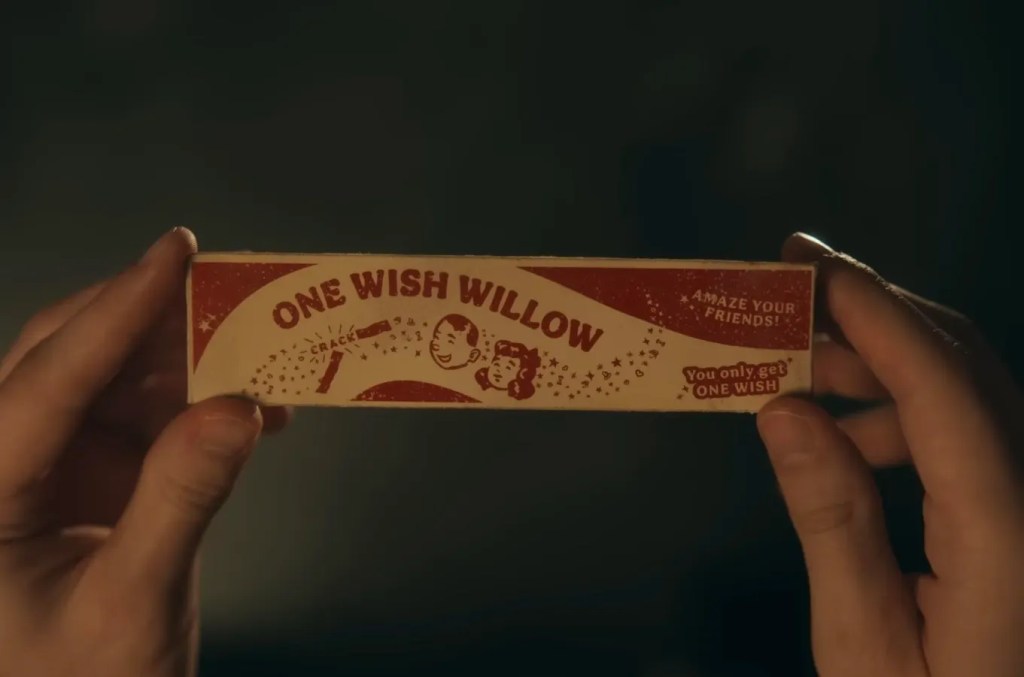
Which brings me back to Barker’s Obsession. A clever, well acted, well framed film. It is neither Magnificent nor even Odd, nor does it have Geneviève Bujold. For those overwhelmingly familiar with modern American horror cinema, or even US tv dramas/sitcoms/romcoms, Nikki Freeman (Inde Navarrette) appears intensely collegiate and a being of social media. Michael Douglas did not need to wish for that version of Glenn Close in Fatal Attraction; she was fully formed, as was Jessica Walter in Play Misty for Me. The becoming of Nikki Freeman can be a signpost for the YouTube changing Hollywood narrative. I mentioned the Obsession plot to my wife who observed that this was close to what happens in Zenitendō, in which a shopkeeper offers candy suited to help those who come to her with problems; the candy, depending if it’s used correctly, will either bring joy or trouble. How difficult the story would have been for the Bear character if the wish came as a vaccine.
1- Backrooms, by Kane Parsons.
Reiko Hiroshima, Curry Barker, la première, autrice japonaise dont la série Fushigi Dagashiya Zenitendō est publiée depuis 2013, adaptée depuis en manga et en anime, et le second, un Américain, content creator sur YouTube dont le premier long métrage, Obsession, est l’un des deux films (1) en train de réécrire les règles du blockbuster à ce moment précis de l’histoire du cinéma. De manière révélatrice, cela se produit alors que le pouvoir des studios, ayant traversé un traumatisme existentiel au cours du XXIe siècle avec l’émergence du streaming, subit désormais l’assaut complet des politiques de rachat et de fusion. On se laisserait aller à croire que l’acquisition de MGM par Amazon fut presque courtoise. Obsession pourrait s’afficher comme simulacre d’un acte de résistance, si ce n’était qu’il a vu le jour dans les moissons de Google.
J’y passe du temps parfois, je suis abonné à diverses chaînes YouTube. Je regardais autrefois le Criterion Closet, lorsque des réalisateurs et acteurs ayant un lien avec le cinéma venaient y choisir des titres. Certains arrivaient avec des choix attendus, d’autres plus surprenants; on y croisait ceux qui savaient s’exprimer avec intelligence et émotion à propos de films précis. Je me souviens de la modestie de Cillian Murphy demandant s’il pouvait prendre avec lui le coffret Wes Anderson. Mais plus récemment, je n’ai aucune idée de qui est l’invité, ou je n’arrive pas à regarder jusqu’au bout, tant on se demande combien de fois le même titre d’Albert Brooks (que je confonds souvent avec Charles Grodin) peut être leur film de référence. Plus encore porteur, peut-être, une nouvelle cinéphilie est en train de naître ici, celle de figures médiatiques du XXIe siècle qui choisissent un film des frères Coen et l’une des rares comédies contemporaines chez Criterion, le choix consensuel étant Fast Times at Ridgemont High (1982…) d’Amy Heckerling, avec un Sean Penn de 22 ans. Ceci alors qu’Obsession sort en même temps qu’un film de Jon Favreau; la tentative devient admise de faire de lui un auteur parce que, comme Lucas, il connaît les films de Kurosawa. J’évoque cela comme une possible stratégie d’archive, celle qui se construit dans de petits espaces plutôt que dans des entrepôts : le placard du Criterion, les chambres aux néons d’ambiance et micros Shure des critiques de cinéma sur YouTube. Rien de semblable n’a jamais eu lieu au Japon pour le cinéma, où Tokyo, autrefois l’une des grandes villes projetant des films internationaux toute l’année, a glissé sans effort, au tournant du siècle, vers une amnésie cinématographique plutôt qu’une immemory — à commencer par sa propre histoire du cinéma, pourtant fabuleuse .
Ce qui me ramène à Obsession de Barker. Un film habile, bien interprété, bien cadré. Il n’est ni Magnificent façon Sirk, ni même Odd comme chez Roeg, et on n’y retrouve pas Geneviève Bujold. Pour ceux qui connaissent de près le cinéma d’horreur américain, ou même les séries/sitcoms/comédies romantiques télévisées, les emportements, les cris, de Nikki Freeman (Inde Navarrette) la rendent intensément reconnaissable, comme une figure sortie des réseaux sociaux. Michael Douglas n’avait pas besoin de souhaiter cette version de Glenn Close dans Liaison fatale ; elle était déjà entière et présente, tout comme Jessica Walter dans Play Misty for Me. Le devenir de Nikki Freeman peut être vu comme un indicateur du récit hollywoodien transformé par YouTube. J’ai raconté l’intrigue d’Obsession à ma compagne, qui a remarqué que cela se rapprochait de ce qui se déroule dans Zenitendō, où une commerçante propose des bonbons adaptés aux problèmes de ceux qui s’y rendent ; le bonbon, selon qu’il est utilisé correctement ou non, apportera ou la joie, ou des ennuis. Combien l’histoire aurait été difficile pour le personnage de Bear si le souhait s’était présenté sous forme de vaccin.
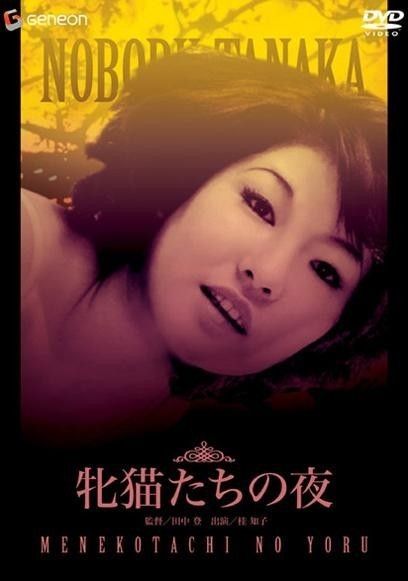
La Cinémathèque Française programme du 10 au 24 juin 2026 une sélection Roman Porno du studio Nikkatsu, le plus vieux studio de cinéma au Japon. La production de ces films permit d’observer (ce que l’on croit encore devoir nommer) la marge empêchant la fermeture du studio et de sauver les équipes et les emplois. Je m’étais entretenu avec deux maîtres du genre, tout d’abord avec Tanaka Noboru lors d’une rétrospective de ses films dans la salle d’art et d’essai La Puta, à Tokyo, et plus longuement avec Konuma Masaru.
Tout cela était paru dans la chronique SoOtaku sur une version antérieure du site des Cahiers du Cinéma, puis en 2015 dans mon livre Réponses du Cinéma Japonais Contemporain, et enfin dans le coffret Roman Porno que j’ai co-dirigé pour l’éditeur dvd Éléphant paru en 2019, pour lequel j’ai également rédigé l’ouvrage L’Aventure du Corps dans le Cinéma Japonais.
Deux séances seront présentées par Clara Sebastio, que je découvre (1).
A Tokyo, Hasebe Yasuharu (2), l’un des réalisateurs les plus extrêmes du genre voyait son oeuvre faire l’objet d’une étude remarquable par une chercheuse Japonaise, Mio Hatokai. Son film Les Femmes de la bourrasque, plus retenu, est au programme, qui compte huit titres qui ont écrit l’histoire du Roman Porno, des Amants Mouillés de Tatsumi Kumashiro (1971) à Love Hotel de Shinji Somai (1985).
J’ai beaucoup écrit sur, et parlé de, ces films en France. Le réalisateur Konuma Masaru, qui a signé quelques uns des films les plus incandescents de l’histoire du cinéma japonais, me raconta longuement les tournages de ses films et les ambitions de ses pairs chez Nikkatsu, tous issus de milieux sociaux plus modestes, conscients de ne pas appartenir aux univers des studios Shochiku et Toho.
Je pense moins en ce moment à ce que j’ajouterais de plus à mes textes parus il y a près de dix ans, et davantage à ce qu’on ne peut plus dire de ces films. Ce qui doit sauter.
1- Avec l’espoir qu’une trace d’une de ses interventions sera disponible sur le site de la Cinémathèque.
2- On lui doit l’important Black Tight Killers, de 1966, qui aura une véritable sur le cinéma d’action de Hong Kong. Le site Midnight Eye compte quelques textes sur les films de Hasebe.
The Gate of Flesh
The Cinémathèque Française is programming a Roman Porno selection from the Nikkatsu studio — Japan’s oldest film studio — from June 10 to 24, 2026. The making of these films made it possible to observe what one still feels compelled to call the margin and how it prevented the studio from closing and saved jobs and crews. I had spoken with two masters of the genre: first with Tanaka Noboru at a retrospective of his films at the art-house cinema La Puta in Tokyo, and at greater length with Konuma Masaru. Versions of this had appeared in the SoOtaku column on an earlier iteration of the Cahiers du Cinéma website, then in 2015 in my book Réponses du Cinéma Japonais Contemporain, and finally in the Roman Porno box set I co-edited for the DVD publisher Éléphant, released in 2019, for which I also wrote the volume L’Aventure du Corps dans le Cinéma Japonais.
Two screenings will be presented by Clara Sebastio, whose work I’m discovering (1).
In Tokyo, Hasebe Yasuharu (2) — one of the most extreme directors of the genre — saw his work be the subject of a remarkable study by a Japanese researcher, Mio Hatokai. His film Women in a Windstorm, a more restrained selection, is on the programme, which includes eight titles that wrote the history of Roman Porno, from Tatsumi Kumashiro’s Wet Lovers(1971) to Shinji Somai’s Love Hotel (1985).
I have written a great deal about these films in France, and spoken about them at length. The director Konuma Masaru, who made some of the most incandescent films in the history of Japanese cinema, told me at length about the shoots and the ambitions of his peers at Nikkatsu — all from more modest social backgrounds, all aware that they did not belong to the world of the Shochiku and Toho studios.
I am thinking less at this moment about what I would add to texts published nearly ten years ago, and more about what can no longer be said about these films. What must be cut.
1 — With the hope that a record of one of her talks will be available on the Cinémathèque’s website.
2 — We owe him the important Black Tight Killers (1966), which would have a genuine influence on Hong Kong action cinema. The Midnight Eye website carries several texts on Hasebe’s films.
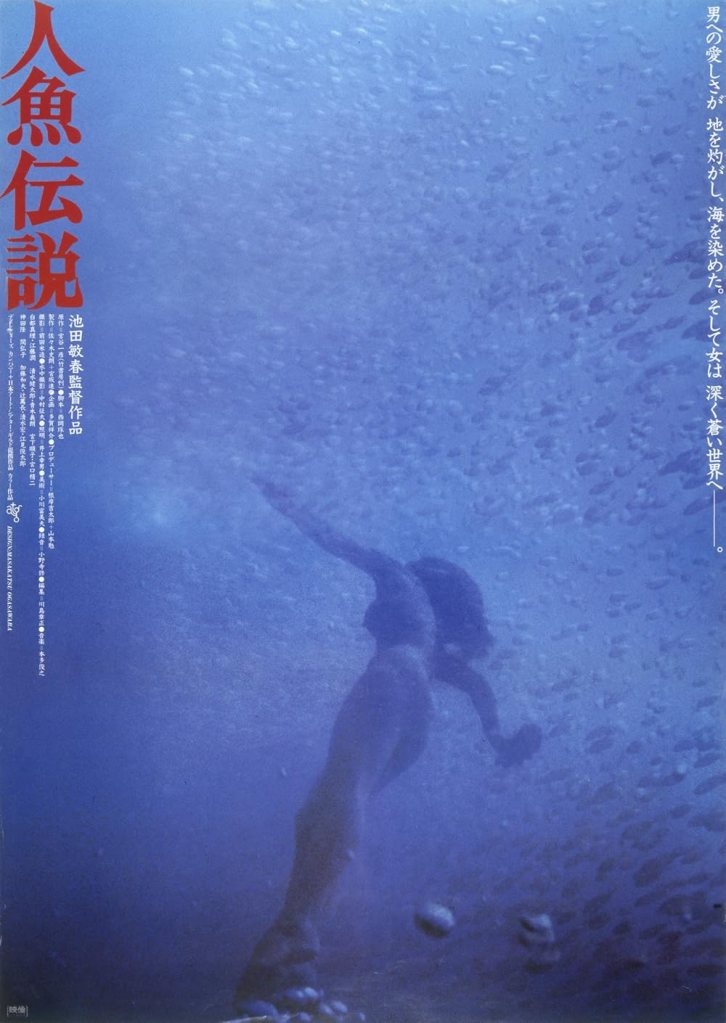
Quarante après la sortie Mermaid Legend au Japon, Ikeda Toshiharu n’était plus le réalisateur que d’un seul film. Evil Dead Trap (1988) avait eu droit aux éloges de la mouvance bis qu’incarnaient Asian Cult Cinema et FantAsia au cours des années 90. C’est à cette période que je rencontre le réalisateur pour la première fois (1), pour évoquer EDT, un film slasher marqué par Dario Argento. Ikeda se plaisait à répéter dans les entretiens qu’il était incapable de regarder des films d’horreur et qu’il n’avait jamais vu son film en entier.
Ce récit malicieux d’une journaliste à la télévision qui invite le public à lui envoyer des cassettes snuff et qui se rend là où les meurtres auraient eu lieu, où elle est prise au piège, annonce déjà Ring de Nakata Hideo (2). Les deux réalisateurs furent formés au studio Nikkatsu, avant de rejoindre Toei. Les deux font l’expérience du roman porno aux côtés de Konuma Masaru, et Ikeda poursuivra une voie l’entraînant vers une série de films action & soft core, des productions V-Cinema chez Toei, dont XXBeautiful Prey et XX Beautiful Beast (3) . Il se laisse aussi porter par la tentation d’auteur et accepte de rejoindre la Director’s Company, fondée en 1982, dont l’objectif tenait à soutenir une nouvelle génération de réalisateurs. Ishii Sogo, Kurosawa Kiyoshi, Takahashi Bantam, et Somai Shinji comptent parmi ses membres. Nikkatsu, Kadokawa Pictures, et ATG distribuent leurs films au Japon. L’aventure prendra fin en 1992. En France, la seule sortie importante de cette maison de production fut Typhoon Club de Somai, en 1988.
Ce dernier tourna également Love Hotel, un an après Mermaid Legend, tous produits par la Director’s Company. L’éditeur anglais Third Window Films acquit les droits de certains de leurs titres tandis que Carlotta s’arrêtait à Mermaid Legend. Si Somai Shinji eut droit à une rétrospective à la Cinémathèque Française, et Morita Yashimitsu à un programme à la Maison de la Culture du Japon à Paris, il est moins probable qu’Ikeda ait droit lui aussi à une telle reconnaissance. Son parcours révèle une oeuvre glissante, d’un genre à l’autre, de modèles de production auquel il se plie et s’adapte selon les structures, souvent faits de tournages rapides. Mermaid Legend rassemble les touches troublantes qui caractérisent les préoccupations du réalisateur, ses traversées des univers du cinéma d’horreur, de la violence érotique (il signe l’un des meilleurs volets de la série Angel Guts, Red Porno, d’après Takashi Ishii), et des ambitions du milieu yakuza avant la récession économique.
Le film porte les traces d’un fantastique du destin, d’une poétique de la condamnation, au service de ce schisme incarné par cette plongeuse Ama, jouée par Mari Shirato, devenue oni, sortie de la mer pour venger son époux, emblème d’un engagement écologique. Lorsque Ikeda tourne Evil Dead Trap trois ans plus tard, cette fois c’est à son héroïne de sombrer dans un espace qui ne cherche qu’à ne faire d’elle qu’une victime. Et qui résiste. Il traversera les années 90 et le début des années 2000 en enchaînant des volets de tueuses dévêtues, des sorties v-cinema. Ses derniers films qui eurent des sorties en salle, Hasami Otoko (2004) et Aki Fukaki (2008), prennent la mesure résignée de ce qui l’éloignait du travail de ses pairs. Il disparaît le 26 décembre 2010, et fut retrouvé un mois plus tard, flottant dans la mer, dans la préfecture de Mie.
1- Au cours de mes années de collaboration avec HK Extreme Orient.
Midnight Eye reprendra le flambeau à partir de 2001, s’investissant davantage dans ces films qui avaient été laissés de côté par la cinéphilie qui célébrait Kitano, Kurosawa, et Kawase, se penchant notamment sur ceux de la J-Horror.
2- Toei me demanda de travailler sur un dossier de presse international lors de la sortie de Ring. On me proposa également de présenter l’adaption de Kagi, de Jun’ichiro Tanizaki, par Ikeda, aux distributeurs Français de l’époque. Le roman, paru sous le titre français La Clé, avait déjà été adapté par un autre cinéaste honteusement peu montré en France, Kon Ichikawa, en 1959. La version d’Ikeda ne suscita guère plus de curiosité.
3- Tom Mes, co-fondateur de Midnight Eye, se spécialisa dans l’histoire du V-cinema.
Mermaid Legend (1984), by Ikeda Toshiharu
The Art of Not Having Heard the Scream
Forty years after the Japanese release of Mermaid Legend, Ikeda Toshiharu had become the director of a single other film. Evil Dead Trap (1988) had earned the praise of the bis movement embodied by Asian Cult Cinema and FantAsia during the 1990s. It was during this period that I met the director for the first time (1), to discuss EDT, a slasher film marked by Dario Argento. Ikeda enjoyed repeating in interviews that he was incapable of watching horror films and had never seen his own film in its entirety.
This exploitive tale of a television journalist who invites the public to send her snuff tapes and travels to the locations where the murders allegedly took place, where she is then trapped, already anticipates Nakata Hideo’s Ring (2). Both directors trained at Nikkatsu Studio before moving to Toei. Both had experience with roman porno alongside Konuma Masaru, and Ikeda would pursue a path drawing him toward a series of action and soft-core films, V-Cinema productions at Toei, among them XX Beautiful Prey and XX Beautiful Beast (3). He also yielded to the auteur temptation and agreed to join the Director’s Company, founded in 1982 with the aim of supporting a new generation of filmmakers. Ishii Sogo, Kurosawa Kiyoshi, Takahashi Bantam, and Somai Shinji were among its members. Nikkatsu, Kadokawa Pictures, and ATG distributed their films in Japan. The venture came to an end in 1992. In France, the only significant release from this production company was Somai’s Typhoon Club, in 1988.
Somai also directed Love Hotel a year after Mermaid Legend, both produced by the Director’s Company. The British publisher Third Window Films acquired the rights to several of their titles while Carlotta stopped at Mermaid Legend. Although Somai Shinji got a retrospective at the Cinémathèque Française, and Morita Yoshimitsu a programme at the Maison de la Culture du Japon in Paris, it seems unlikely that Ikeda will be accorded similar recognition. His career reveals a slippery body of work, sliding from one genre to the next, bending and adapting to production models and structures, often built around rapid shoots. Mermaid Legend gathers the troubling touches that characterise the director’s preoccupations — his traversal of horror cinema, erotic violence (he directed one of the finest instalments in the Angel Guts series, Red Porno, based on the work of Takashi Ishii), and the ambitions of the yakuza world before the economic recession.
The film carries traces of a fatalistic fantasy, a poetics of condemnation, in service of the schism embodied by this amadiver, played by Mari Shirato, who has become an oni, risen from the sea to avenge her husband — an emblem of ecological commitment. When Ikeda made Evil Dead Trap three years later, it is now his heroine who sinks into a space that seeks only to make a victim of her. And who resists. He would navigate the 1990s and early 2000s churning out instalments of undressed female assassins, V-Cinema releases. His final films to receive theatrical distribution, Hasami Otoko (2004) and Aki Fukaki (2008), take the resigned measure of what distanced him from the work of his peers. He disappeared on December 26, 2010, and was found a month later, floating in the sea, in Mie Prefecture.
1 — During my years of collaboration with HK Extrême Orient. Midnight Eye, from 2001, invested itself more deeply in those films that had been set aside by the cinephile culture celebrating Kitano, Kurosawa, and Kawase, focusing notably on J-Horror.
2 — Toei asked me to work on an international press kit for the release of Ring. I was also offered the opportunity to present Ikeda’s adaptation of Jun’ichiro Tanizaki’s Kagi to French distributors of the time. The novel, published in French under the title La Clé, had already been adapted by another shamefully underscreened director in France, Kon Ichikawa, in 1959. Ikeda’s version aroused no greater curiosity.
3 — Tom Mes, co-founder of Midnight Eye, specialised in the history of V-Cinema.
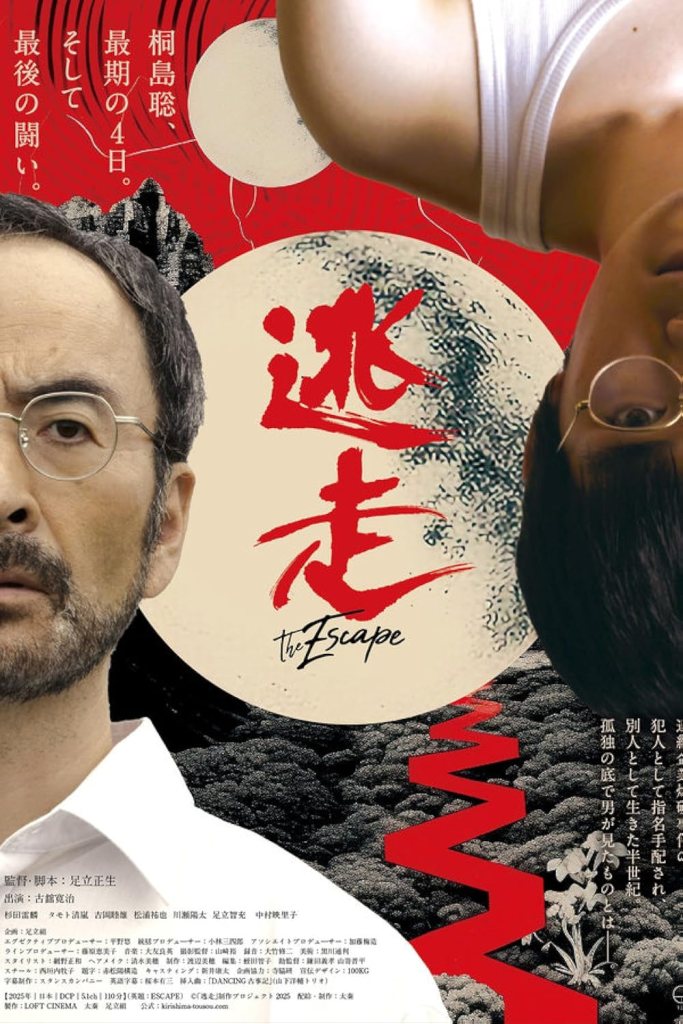
The Escape, avec Kanji Furutachi, Rairu Sugita, Yuya Matsuura.
Écrit et réalisé par Masao Adachi
Japon, 2025, 114min.
Mesurons tout d’abord la singularité du statut de Masao Adachi. Figure centrale du cinéma pinku-politique des années 60-70 aux côtés de Koji Wakamatsu, avec lequel il co-réalise Red Army/PFLP: Declaration of War, en 1971, collaborateur de Nagisa Oshima pendant sa période ATG, et membre de l’Armée Rouge Japonaise qui vécut vingt-sept années au Liban avant d’être déporté au Japon en 2000, il fut en mesure de se remettre à l’écriture et à la réalisation peu après son retour. Il signait en 2022 Revolution + 1, sur l’assassin présumé de l’ancien premier ministre Shinzo Abe.
The Escape est un autre portrait, cette fois de Satoshi Kurushima, l’homme dont la photographie ornait tous les Koban du Japon, déclaré terroriste en 1974, réussissant à échapper à la police pendant plus de cinq décennies, avant de révéler son identité à ses médecins peu avant sa mort d’un cancer de l’estomac en 2024. Kurushima fut membre du East Asia Anti-Japanese Armed Front, qui menait une campagne contre les grands industriels poursuivant l’exploitation coloniale des communautés Ainu et Coréennes. Une explosion causa la mort de huit personnes au QG de Mitsubishi Heavy Industries, entraînant la dissolution du EAAJAF et la fuite de ses membres. Kurushima, issu de mouvements militants universitaires, créa de nouvelles identités, vivant de petits boulots de construction dans des PME habituées aux employés de passage. Dans les années 80, les régions connaissent à leur tour l’essor économique des années de bulle, et les entrepreneurs sont avides de main d’oeuvre. Il deviendra Hiroshi Uchida et trouve une société où il se sent moins traqué. Sa solitude, l’impossibilité de nouer des liens intimes de longue durée, le laissent à ses souvenirs, à ses doutes, à la nature de ses engagements, au sentiment d’impuissance malgré toutes ces années consacrées au secret de son combat.
Adachi retrace ainsi à la fois la dissolution d’une parole de résistance dans l’histoire du Japon contemporain, tout en démontrant que celle-ci n’est pas menacée lorsqu’elle fait le choix de s’exprimer. The Escape compte parmi les films les plus accomplis dans le parcours de ce mythe qu’est devenu Adachi.
Rairu Sugita tient le rôle du jeune Kurushima et l’immense Kanji Furutachi celui du clandestin Uchida, qui reste à l’affut des changements sociaux du Japon, qui apprend l’arrestation, les suicides, d’autres membres du EAAJAF. Il résiste en écoutant de la musique dans sa chambre modeste du dortoir des employés, va danser en écoutant des groupes. Des extraits instrumentaux lui servent à se faire un montage des actualités qu’il lit, qu’il écoute, du sort des grandes entreprises japonaises à la cause Palestinienne à laquelle Adachi reste fidèle.
Le film compte tant de séquences qui ne cessent d’interroger l’histoire lorsqu’elle procède du point de vue d’un nombre restreint d’individus. Et lorsque Kurushima réalise qu’il devra rester seul, c’est à lui-même qu’il s’en prend. Les échanges entre Furutachi et Sugita sur fond de free jazz nous rappellent cette période engagée du cinéma japonais. Il n’y a que Masao Adachi aujourd’hui au Japon qui ait encore les moyens de réaliser un tel film.
The Long Escape
The Escape, with Furutachi Kanji , Sugita Rain, Matsuura Yuya
Written and directed by AdachiMasao, Japan, 2025, 114 min.
Let us first consider the singular status of Adachi Masao. A central figure in the pinku-political cinema of the 1960s and 70s alongside Koji Wakamatsu, with whom he co-directed Red Army/PFLP: Declaration of War in 1971, a collaborator of Nagisa Oshima during his ATG period, and a member of the Japanese Red Army who spent twenty-seven years in Lebanon before being deported to Japan in 2000, he was able to return to writing and directing shortly after his return. In 2022 he made Revolution + 1, about the presumed assassin of former Prime Minister Shinzo Abe.
The Escape is another portrait — this time of Kurushima Satoshi, the man whose photograph adorned every koban in Japan, declared a terrorist in 1974, managing to evade the police for more than five decades before revealing his identity to his doctors shortly before his death from stomach cancer in 2024. Kurushima was a member of the East Asia Anti-Japanese Armed Front, which waged a campaign against major industrialists continuing the colonial exploitation of Ainu and Korean communities. An explosion caused the deaths of eight people at the headquarters of Mitsubishi Heavy Industries, leading to the dissolution of the EAAJAF and the flight of its members. Kurushima, who came from university militant movements, created new identities, living off casual construction work at small companies accustomed to transient employees. In the 1980s, regional areas experienced the boom years of the bubble economy, and entrepreneurs were hungry for labour. He became Uchida Hiroshi and found a society in which he felt less hunted. His solitude, the impossibility of forming lasting intimate bonds, left him to his memories, his doubts, the nature of his commitments, and the feeling of powerlessness despite all those years devoted to the secret of his struggle.
Adachi thus simultaneously traces the dissolution of a language of resistance in the history of contemporary Japan, while demonstrating that it is not threatened when it chooses to speak. The Escape ranks among the most accomplished films in the career of the figure that Adachi has become.
Sugita Rairu plays the young Kurushima and the formidable Furutachi Kanji the clandestine Uchida, who remains alert to Japan’s social shifts, learning of the arrests and suicides of other EAAJAF members. He resists by listening to music in his modest dormitory room, going out to dance to live bands. Instrumental excerpts serve him as a personal edit of the news he reads and hears — from the fate of major Japanese corporations to the Palestinian cause to which Adachi remains loyal.
The film contains so many sequences that ceaselessly interrogate history when it proceeds from the vantage point of a small number of individuals. And when Kurushima realises he will have to remain alone, it is himself he turns against. The exchanges between Furutachi and Sugita against a backdrop of free jazz recall that committed period of Japanese cinema. There is only Adachi in Japan today who still has the means to make a film like this.
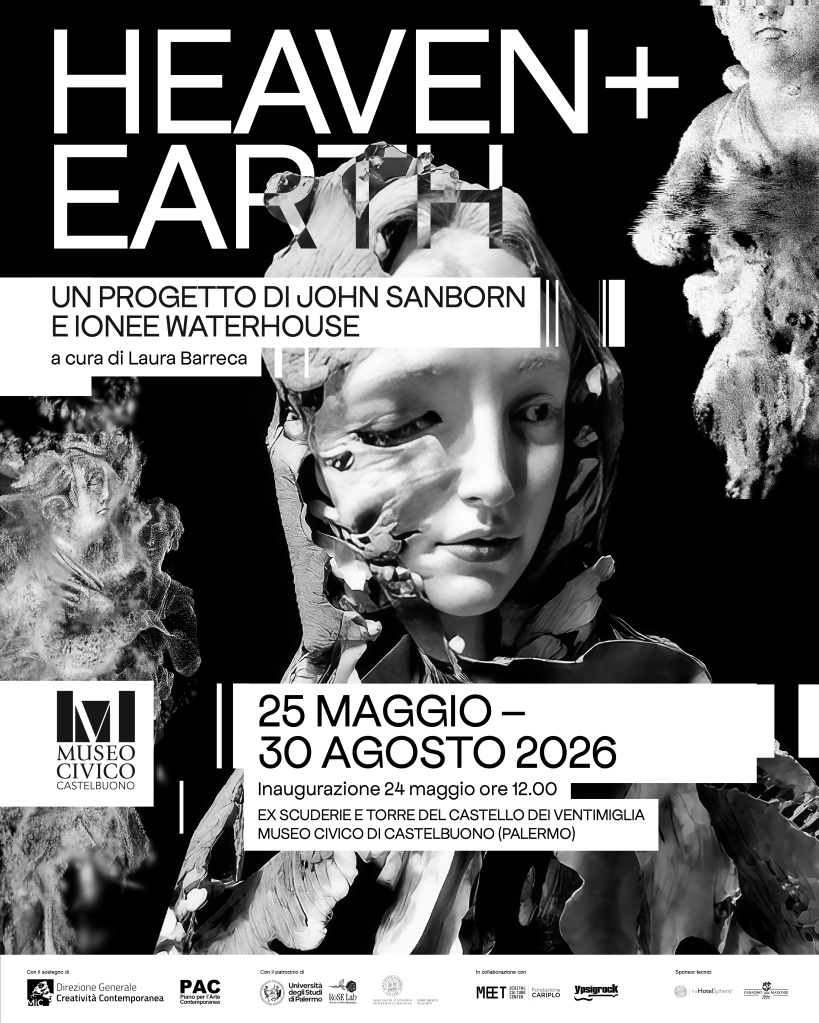
A remarkable new installation by artists John Sanborn and Ionee Waterhouse opened on May 25 in Castelbuono, Sicily, and runs until August 30. While both artists have a long practice of collaborations, this is the first time they’ve worked together. It provides another opportunity for discussing the ways in which AI finds its way into the art world. Their installation, Heaven + Earth, does not rely on generative AI but rather on existing elements prompted by the artists. More than two years in the making, the exhibition is curated by Laura Barreca, director of the Museo Civico di Castelbuono; the work was ‘designed on commission of the Museum for the historical context of the medieval castle of the Ventimigli. Heaven+Earth brings into dialogue cultural heritage, digital technologies and human heritage.‘ Dialogue was very much a distinct feature of the project, between artists, members of the scientific committee assembled for the show and for the accompanying catalogue, between curators then curator, and lastly between the catalogue’s editors. A sinuous undertaking that will see the volume published in September 2026.
I am credited as co-editor of the latter. I contributed an essay and an interview with the artists; I read the shorter contributions by committee members, which arrived shortly before all needed to be sent to the publisher. A process that was more about clearing the way than risking interfering with the promise made: delivering a show and a book. A promise bound to the sacred, a theme John Sanborn has explored in a number of works. I will comment further on this singular experience once the catalogue is published. It introduced me to the work of Ionee Waterhouse, and confirmed that John Sanborn has yet again subverted the technology in order to have it reveal to itself what it had not dreamed capable of doing. A 21st century entreprise looking at the 18th century. Now comes the time to deal with the 21st.
Valie Export passed away in Vienna, on May 14th. She was 85 years old. As often happens, I made my way backwards to her work. The first one I was in synch with, age wise, was Die Praxis der Liebe (The Practice of Love, 1984), which I saw as a student. Five years later, I made my way to Berlin to see Video Skulptur und Aktuel, 1963-1989, curated by Wulf Herzogenrath and Edith Decker. Everybody that needed to be in it was in it. The works of Klaus vom Bruch, Ulrike Rosenbach, and Friedrike Pezold were revelations, pointing to a performance practice distinct from seminal figures such as Carolee Schneemann and Joan Jonas who were also using film and video. This exhibition coincided with the start of my own programming activity and I was eager to include these artists from Germany and Austria. Which brought me back to Valie Export and the catching up I needed to do.
I reached out to her with the hope of showing her short films and performance documents from the late sixties and seventies. I met her before encountering Peter Weibel, with whom I would have several collaborations from the nineties on. Tapp- und Tastkino (Tap and Touch Cinema, 1968–71) and Aktionshose: Genitalpanik (Action Pants: Genital Panic, 1969) were unsettling and transgressive, not unlike what Cosey Fanni Tutti conceived during the eighties. Export was more politically confrontational than what Yoko Ono or Gina Pane were doing -bringing danger inside- within knowing venues at the ready. Her work with film and media did not explore its properties the way that Rosenbach did, nor did she confine herself to that medium. But she continued to make use of it in installations such as Geburtenbett, 1980. She was welcoming and generous with answers, at ease and confident of the way in which her work pointed to the power articulations of desire.
VALIE EXPORT s’est éteinte à Vienne le 14 mai dernier. Elle avait 85 ans. Comme il m’arrivait souvent, c’est à rebours que je ferai chemin vers son œuvre. La première fut Die Praxis der Liebe (La Pratique de l’amour, 1984), que j’avais vue étudiant. Cinq ans plus tard, je me rendais à Berlin pour Video Skulptur und Aktuell, 1963-1989, organisée par Wulf Herzogenrath et Edith Decker. Tous ceux qui devaient en être y participaient. Les œuvres de Klaus vom Bruch, Ulrike Rosenbach et Friederike Pezold furent des révélations, pointant vers une pratique de la performance distincte de celle de figures référentielles telles que Carolee Schneemann et Joan Jonas, qui elles aussi avaient intégré court-métrage et vidéo à leurs productions. Cette exposition coïncida avec le début de ma propre activité de programmation, et je tenais à y inclure ces artistes d’Allemagne et d’Autriche. Ce qui me ramena à VALIE EXPORT et au rattrapage qui s’imposait.
Je pris contact avec elle dans l’espoir de montrer ses films et documents de performance des années soixante et soixante-dix. Je la rencontrai avant de croiser Peter Weibel, avec lequel j’aurais plusieurs collaborations à partir des années quatre-vingt-dix. Tapp- und Tastkino (Tap and Touch Cinema, 1968-71) et Aktionshose: Genitalpanik (Action Pants: Genital Panic, 1969) étaient dérangeants et transgressifs, non sans rappeler ce que Cosey Fanni Tutti produisait dans les années quatre-vingt. Export était plus frontalement politique que ce que proposaient Yoko Ono ou Gina Pane — deux artistes introduisant le danger à l’intérieur de lieux avertis et consentants. Ses films et ses vidéos n’en exploraient pas les propriétés à la manière de Rosenbach, et elle ne se confinait pas qu’à ce médium. Elle continua néanmoins d’y recourir dans des installations telles que Geburtenbett, 1980. Elle était accueillante, généreuse dans ses réponses, à l’aise et assurée dans la façon dont son œuvre soulignait les mécanismes de pouvoir du désir.
Au cours de la semaine du 11 mai, autour de l’édition 2026 du festival de Cannes, je découvre en parcourant Le Monde et The Guardian deux articles qui ont produit dans le désordre de brèves réflexions. Le point commun entre les deux parutions souligne le rôle des influencers et la place qu’il-elle-s occupent dans la conversation contemporaine sur le cinéma. Le Monde nous montre d’ailleurs une photo en contre-plongée de quatre ou cinq représentant.e.s (j’oublie), reconnaissance Française, s’arrêtant sur leur rôle à Cannes. Meta y sera à nouveau omniprésent avec ses créateurs de contenus, pour un festival où les selfies sont interdits par son directeur. The Guardian nous parle de la revue Anglaise, sur papier, A Rabbit’s Foot, tournée vers le rêve des anciens Cahiers du Cinéma. Pas de photo de l’équipe mais une citation ou deux d’un des principaux rédacteurs, Chris Cotonou, qui énonce que pour sa génération, la présence, la sortie d’un film de Hamaguchi est plus excitante que celle d’un Coppola ou d’un Tarantino. Coppola a réalisé entre les âges de 32 et 40 ans The Godfather I & II, The Conversation, Apocalypse now. Quoi qu’on en dise, Drive my Car est à la traîne.
Et à propos de cinéma américain, ces deux articles citent les réactions à l’absence de ‘grands films de studios’ à Cannes cette année, ceci ne pouvant que signifier le retour de l’auteur. La preuve, les quatre auteurs japonais, Hirokazu Koreeda, Kiyoshi Kurosawa, Ryusuke Hamaguchi, et Koji Fukada sont tous à Cannes. À l’heure où Jane Fonda déclare sur la Croisette que le cinéma est un acte de résistance, Andy Garcia et John Travolta, qui signent respectivement leurs premiers films, apparaissent en sélection et je n’ai pas retenu laquelle.
La parole du critique est clivante dans ses analyses et ses regards. Son coeur balance lorsqu’un film à grand budget récolte l’unanimité du public, mais bat son plein quand un auteur rafle tout, de Venise aux Oscars. François Truffaut fut l’un de ces critiques particulièrement féroces. Il avait cependant eu cette phrase, ‘on n’a jamais érigé de statue à la mémoire d’un critique’. La visibilité des influencers sur les réseaux sociaux, des YouTube channels sur le cinéma, c’est la revanche du critique, du content creator.
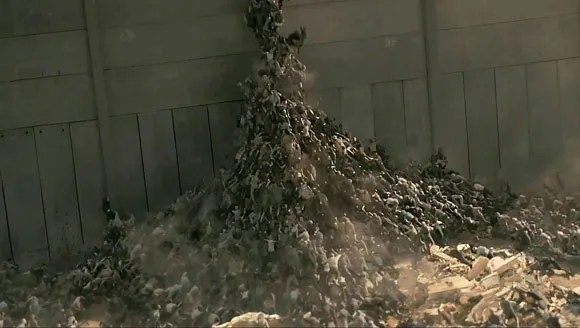
Je pense beaucoup à Arthur Jafa depuis deux, trois ans, pour un essai dont la structure peine à contenir son intelligence et sa force. Dans un échange avec le rédacteur-en-chef de la revue Artforum, David Velasco, Jafa parle de l’arrivée de Basquiat dans le milieu de l’art. Pour illustrer ce que cela représenta pour lui et son ami Greg Tate, il évoque le film World War Z, qu’il dit aimer, avec Brad Pitt. Il décrit une scène du film qui se déroule en Israel, lorsqu’un zombie grimpe le mur du périmètre. Et derrière lui se trouve un tsunami de zombies. Jafa conclut que Basquiat était ce premier zombie dans le monde l’art et que tout allait changer par la suite. Pour ces immenses artistes américain.e.s des années 80, de Barbara Kruger à Jenny Holzer, Jeff Koons, Ross Bleckner, cela semblait normal de n’avoir que Basquiat? Keith Haring et Julian Schnabel avaient répondu à cette question. Enfin, cette analogie me ramène à la Croisette, ce mur à grimper, la déferlante en ligne, dévorante. Il fut un temps où nous aurions ajouter ‘en quête de légitimité’, mais être meta a depuis longtemps dépassé cette préoccupation.
Je regardais la conférence de presse présentant le jury de Cannes cette année, une fois de plus témoigner de l’élégance et raffinement de Park Chan-wook. À ses côtés, Demi Moore terminait sa réaction à l’invitation d’être membre du Jury en nous rappelant où le festival se trouve, la mer tout près . What a view! S’exclamait-elle. Que voit-elle venir?
During the week of May 11, around the 2026 Cannes Film Festival, I came across two articles in Le Monde and The Guardian that produced, in no particular order, a few brief reflections. The common thread between the two publications underlines the role of influencers and the place they occupy in contemporary conversation about cinema. Le Monde shows us a low-angle photograph of four or five representatives (I forget how many), French recognition, pausing on their role at Cannes. Meta will once again be omnipresent with its content creators, at a festival where selfies are banned by its director. The Guardian tells us about the British print magazine A Rabbit’s Foot, oriented toward the dream of the old Cahiers du Cinéma. No photo of the team but a quote or two from one of its principal contributors, Chris Cotonou, who states that for his generation, the release of a Hamaguchi film is more exciting than one by Coppola or Tarantino. Coppola made, between the ages of 32 and 40, The Godfather I & II, The Conversation, Apocalypse Now.
Whatever one may say, Drive My Car lags behind. And on the subject of American cinema, both articles bring up reactions to the absence of major studio films at Cannes this year — which can only mean the return of the auteur. Proof: four Japanese auteurs, Hirokazu Koreeda, Kiyoshi Kurosawa, Ryusuke Hamaguchi, and Koji Fukada are all there. This when Jane Fonda declares on the Croisette that cinema is an act of resistance, Andy Garcia and John Travolta, each making their directorial debuts, appear in the selection — and I don’t remember which one.
The critic’s voice is divisive in its analyses and its gaze. The heart wavers when a big-budget film wins unanimous public acclaim, but beats fully when an auteur sweeps everything, from Venice to the Oscars. François Truffaut was one of those particularly ferocious critics. Yet he had this line: “On n’a jamais érigé de statue à la mémoire d’un critique.” The visibility of influencers on social media, of YouTube channels on cinema — it is the critic’s revenge, the content creator’s.
I have been thinking a great deal about Arthur Jafa for two or three years now, for an essay whose structure struggles to contain his intelligence and force. In a conversation with the editor-in-chief of Artforum, David Velasco, Jafa speaks of Basquiat’s arrival in the art world. To illustrate what this represented for him and his friend Greg Tate, he uses the film World War Z, which he says he loves, with Brad Pitt. He describes a scene set in Israel, when a zombie climbs the perimeter wall. And behind him is a tsunami of zombies. Jafa concludes that Basquiat was that first zombie in the art world, and that everything would change thereafter. For those immense American artists of the eighties — from Barbara Kruger to Jenny Holzer, Jeff Koons, Ross Bleckner — was it normal to have only Basquiat? Keith Haring and Julian Schnabel had responded to that question. Finally, this analogy brings me back to the Croisette — that wall to climb, the devouring online wave. There was a time when when we might have added something about a quest for legitimacy, but being meta has long since done away with this preoccupation.
I was watching the press conference presenting this year’s Cannes jury, once again witnessing the elegance and refinement of Park Chan-wook. Beside him, Demi Moore finished her response to the invitation to serve on the jury by reminding us where the festival is located — the sea close by. “What a view!” she exclaimed. What does she see coming?
The Mori Art Museum and the Fondation Cartier pour l’art contemporain: Ron Mueck from Wednesday, April 29, to Wednesday, September 23, 2026.
Organized in collaboration with the Fondation Cartier pour l’art contemporain in Paris,this exhibition arrives in Tokyo via Milan and Seoul. It is his first in Japan in 18 years, with many pieces making their Japanese debut.
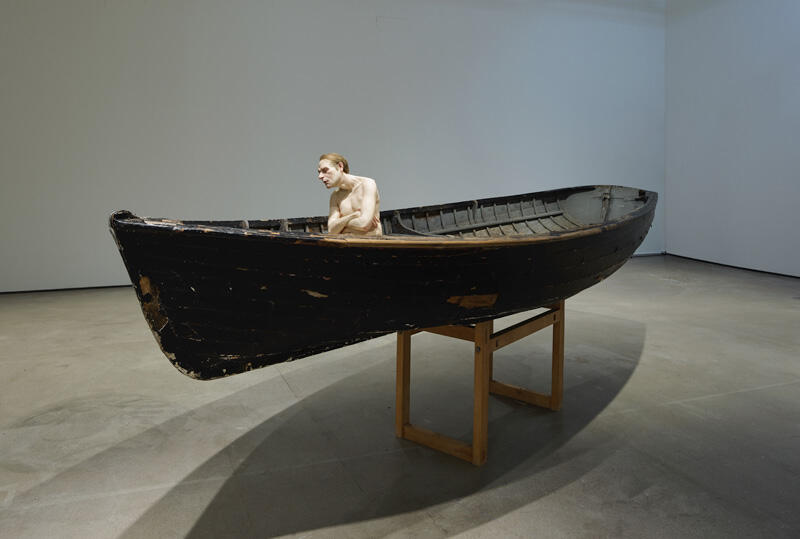
2026 is the year of YBA in Tokyo. This important exhibition held at the Mori Museum opens as another major show currently at The National Art Center devoted the Young British Artists Movement, with which Ron Mueck is associated , is about to close (on May 11). Both shows provide a generational panorama of mediums and preoccupations in 90s UK, more tellingly it could be argued by artists such as Tracy Emin, Steve McQueen, or Gillian Wearing. In the case of Mueck, all institutions are keen to remind us that his output consists of about fifty works. The Mori has eleven of them, a significant selection that includes both allegorical themes and capturess of the quotidian. But still not large enough to occupy all of the museum’s galleries, two of which display a selection of photographs and two films created by French photographer Gautier Deblonde who has documented Mueck’s work for over twenty-five years, including Mass (2005-2017), made up of one hundred giant skulls, tightly packed, catacombs-like though ‘messier’, which aptly closes the show.
The shifts in scale, subjects, and formal materials have quickly placed him in the company of peers who had arrived before, notably Stephan Balkenhol and Charles Ray. Mueck, who emerged in 1996, saw his work received with a newer set of analytical criteria developed in publications ranging from I-D to Frieze. His sculptures were interpreted through a narrative framing in a post-Thatcher Britain; it embraced figuration and theatricality along with a muted, sombre palette of tones and mysteries. These sculptures are without movement, static with the weight of time, of where to go next. Yet it runs for five months in Roppongi.
Man in a Boat, 2002, Mixed media,159 x 138 x 425.5 cm, Private collection, National Museum of Modern andContemporary Art, Seoul, 2025, Photo: Nam Kiyong , Photo courtesy: Fondation Cartier pour l’art contemporain, National, Museum of Modern and Contemporary Art, Korea


 constance-mdc