Category: Uncategorized

  • Less History by the Week

    News of Akihiro Miwa’s passing closed a week that also saw the government cutting the budget for the National Film Archive of Japan by 40%. My colleague Aaron Gerow already explained that the NFAJ was expected to earn more on its own, caught as it is between the message sent about public funding and the absence of tax breaks for larger donations (1). It is difficult to imagine how it can continue to operate with an even smaller budget. Its attractive location in Kyobashi, next to Ginza, is less attuned to the current zeitgeist in the area, all about tourism and extreme shopping. Yet the Kabuki-za feels eternal, as does Shochiku a few steps away.

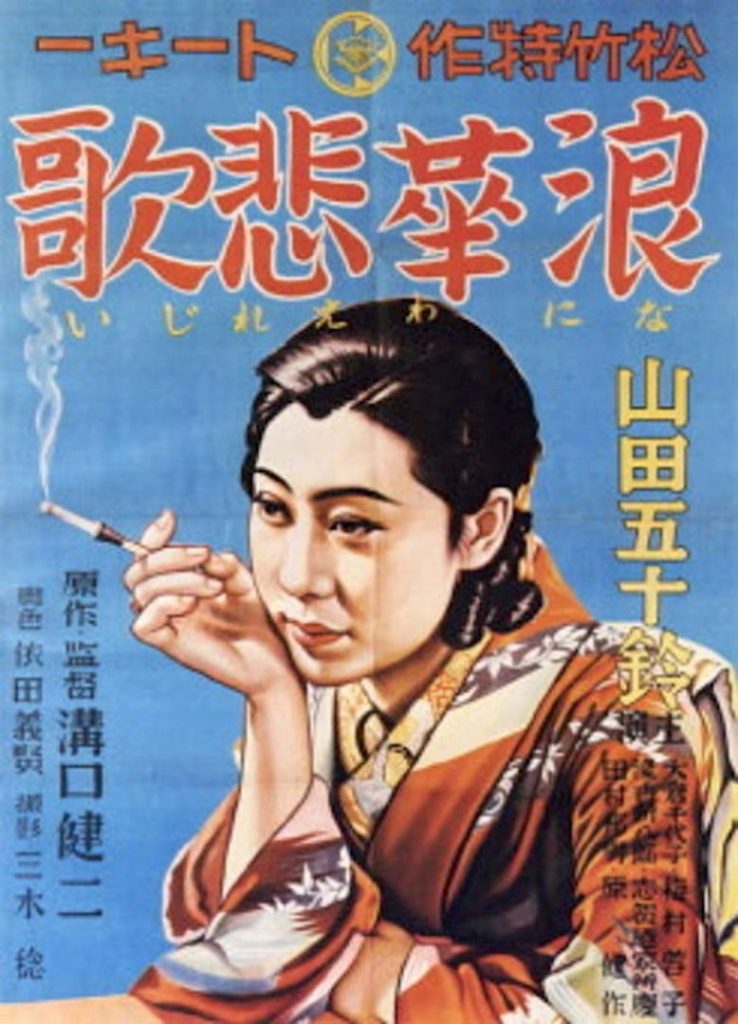
    The NFAJ might have looked in the past to the Cinémathèque Française as a model, or even the more modest Swiss Film Archive in Lausanne, founded by Freddy Buache. But one might suggest the curatorial relevance of its programming did not encourage a renewal of its audience, in spite of seminal screenings such as those in ‘Films made by Women’. Nonetheless, it stood as one of the very few spaces in Japan where an audience could get a sense of why Japanese film history continues to resonate internationally. But that audience isn’t in Kyobashi, even when it had a film school as its neighbor for decades. What to make then of such a denial of black & white cinema?
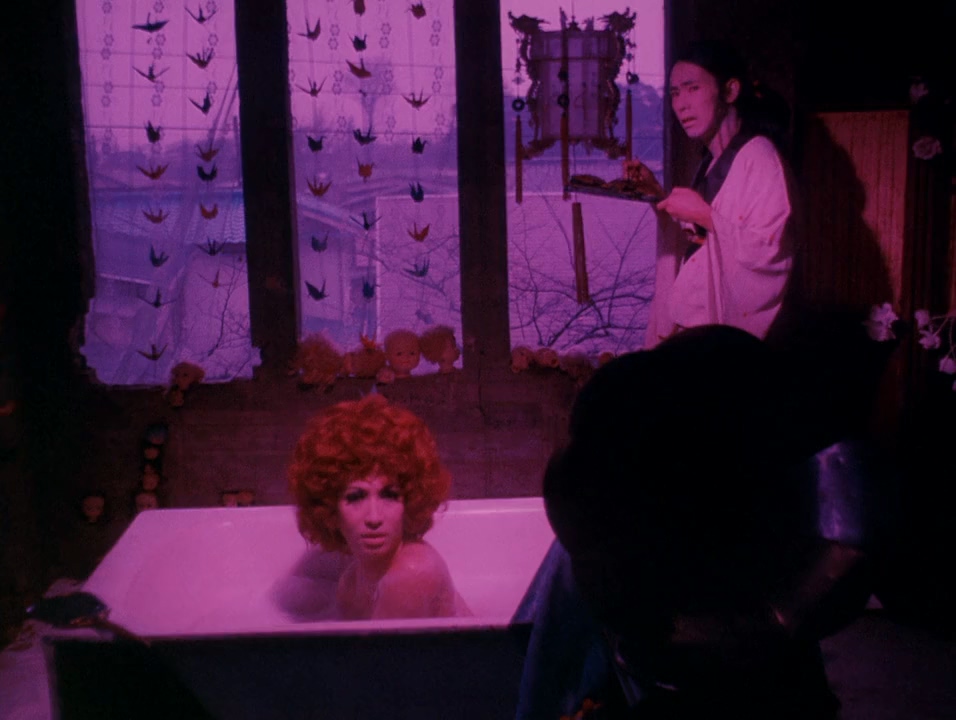
    By contrast, it is impossible to think of Miwa, who passed away at 91, in anything else but color. I first met him at the start of his collaboration with Miyazaki Hayao, for an interview in 1997. I was hoping to include discussion of his work with Fukasaku Kinji, Terayama Shuji, his fabulous albums of the sixties and seventies. But I was asked to keep it to Princess Mononoke. I would meet him several times afterwards, notably in the context of Japan celebrated by France, in Japan; various television portraits of her followed on French tv networks. I may dig out that first, pre-internet, conversation. Perhaps the NFAJ will try to program a retrospective of how Miwa navigated his way through Japan’s film history.
    1-Aaron Gerow also posted that the ArchiveI will try to make up some of the loss through crowd funding. They are aiming for 100 million yen (about 620,000 dollars). Here’s the link:


    https://readyfor.jp/projects/NFAJ2026

  • Export

    Valie Export passed away in Vienna, on May 14th. She was 85 years old. As often happens, I made my way backwards to her work. The first one I was in synch with, age wise, was Die Praxis der Liebe (The Practice of Love, 1984), which I saw as a student. Five years later, I made my way to Berlin to see Video Skulptur und Aktuel, 1963-1989, curated by Wulf Herzogenrath and Edith Decker. Everybody that needed to be in it was in it. The works of Klaus vom Bruch, Ulrike Rosenbach, and Friedrike Pezold were revelations, pointing to a performance practice distinct from seminal figures such as Carolee Schneemann and Joan Jonas who were also using film and video. This exhibition coincided with the start of my own programming activity and I was eager to include these artists from Germany and Austria. Which brought me back to Valie Export and the catching up I needed to do.

    I reached out to her with the hope of showing her short films and performance documents from the late sixties and seventies. I met her before encountering Peter Weibel, with whom I would have several collaborations from the nineties on. Tapp- und Tastkino (Tap and Touch Cinema, 1968–71) and Aktionshose: Genitalpanik (Action Pants: Genital Panic, 1969) were unsettling and transgressive, not unlike what Cosey Fanni Tutti conceived during the eighties. Export was more politically confrontational than what Yoko Ono or Gina Pane were doing -bringing danger inside- within knowing venues at the ready. Her work with film and media did not explore its properties the way that Rosenbach did, nor did she confine herself to that medium. But she continued to make use of it in installations such as Geburtenbett, 1980.  She was welcoming and generous with answers, at ease and confident of the way in which her work pointed to the power articulations of desire.

    VALIE EXPORT s’est éteinte à Vienne le 14 mai dernier. Elle avait 85 ans. Comme il m’arrivait souvent, c’est à rebours que je ferai chemin vers son œuvre. La première fut Die Praxis der Liebe (La Pratique de l’amour, 1984), que j’avais vue étudiant. Cinq ans plus tard, je me rendais à Berlin pour Video Skulptur und Aktuell, 1963-1989, organisée par Wulf Herzogenrath et Edith Decker. Tous ceux qui devaient en être y participaient. Les œuvres de Klaus vom Bruch, Ulrike Rosenbach et Friederike Pezold furent des révélations, pointant vers une pratique de la performance distincte de celle de figures référentielles telles que Carolee Schneemann et Joan Jonas, qui elles aussi avaient intégré court-métrage et vidéo à leurs productions. Cette exposition coïncida avec le début de ma propre activité de programmation, et je tenais à y inclure ces artistes d’Allemagne et d’Autriche. Ce qui me ramena à VALIE EXPORT et au rattrapage qui s’imposait.

    Je pris contact avec elle dans l’espoir de montrer ses films et documents de performance des années soixante et soixante-dix. Je la rencontrai avant de croiser Peter Weibel, avec lequel j’aurais plusieurs collaborations à partir des années quatre-vingt-dix. Tapp- und Tastkino (Tap and Touch Cinema, 1968-71) et Aktionshose: Genitalpanik (Action Pants: Genital Panic, 1969) étaient dérangeants et transgressifs, non sans rappeler ce que Cosey Fanni Tutti produisait dans les années quatre-vingt. Export était plus frontalement politique que ce que proposaient Yoko Ono ou Gina Pane — deux artistes introduisant le danger à l’intérieur de lieux avertis et consentants. Ses films et ses vidéos n’en exploraient pas les propriétés à la manière de Rosenbach, et elle ne se confinait pas qu’à ce médium. Elle continua néanmoins d’y recourir dans des installations telles que Geburtenbett, 1980. Elle était accueillante, généreuse dans ses réponses, à l’aise et assurée dans la façon dont son œuvre soulignait les mécanismes de pouvoir du désir.