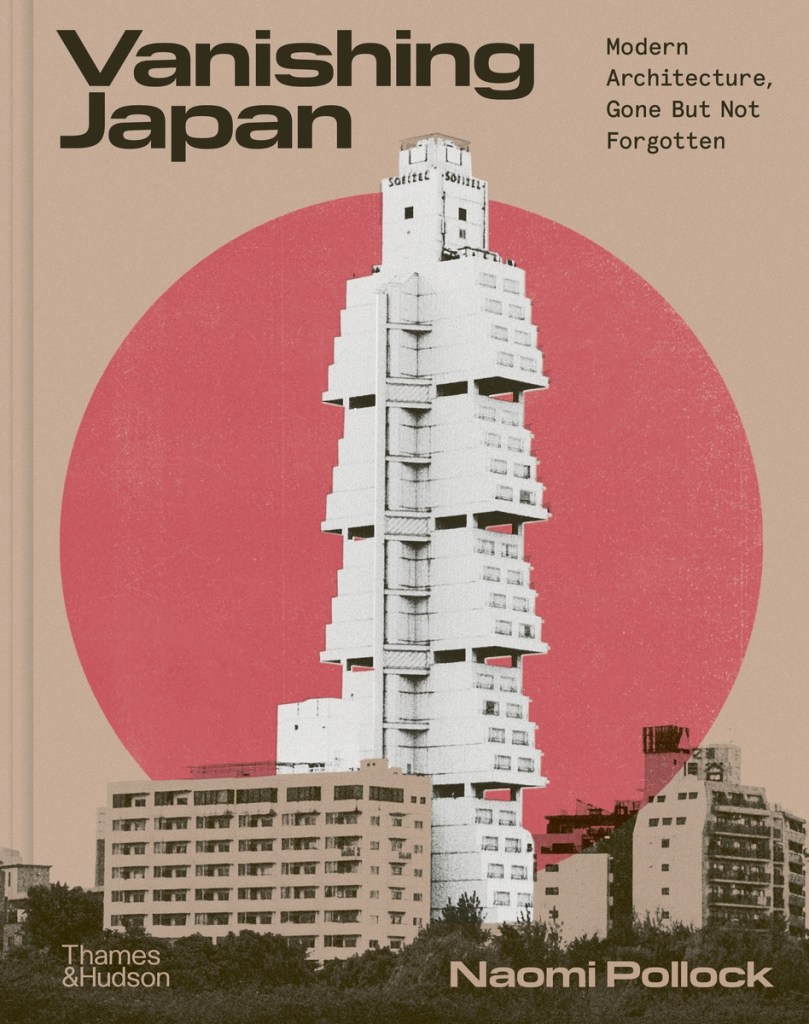
Vanishing Japan: Modern Architecture, Gone but Not Forgotten
Naomi Pollock, Thames & Hudson, 2026
Histories not fit to stay
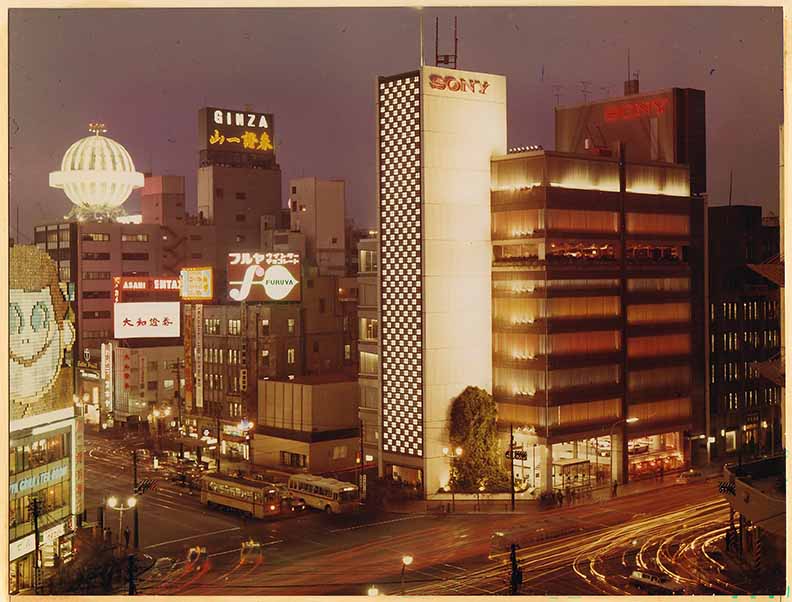
Going through this remarkable volume highlighting architectural marvels of postwar Japan, while needing to be in the Ginza/Hibiya+Yurakucho area for the Tokyo International Film Festival, emphasizes the daring of vision that made its way to a part of the city known for its night life, its department stores, and headquarters of companies such as SONY and famously of TOHO studios, a building that was often spared during Godzilla’s rampage from film to film.
Naomi Pollock has divided this journey into ten chapters that reach all sectors of activity, from industry to leisure. Each one ‘mourns’ the disappearance of structures that were landmarks of Japanese modernity, signifiers of prosperity, and dreams of what the future could look like. Unsurprisingly, most were built in Tokyo but other cities across Japan are well represented, notably those in Kansai. The manner in which they were simply erased from existence, as is the unsentimental method of cities constantly reinventing themselves in a country, would seem at odds with a culture that relishes the melancholy of nostalgia. Over a hundred of them are blissfully preserved here through a description that locates the building, notes its purpose, and offers notable backdrop stories.
Kenzo Tange, Kisho Kurokawa, Kengo Kuma are some of the masters who designed iconic iterations of how this new Japan could exist next to emblems of tradition. Such considerations were also set aside after the buildings came down, most notably in Kyoto, now a chaos of forms. Dismay also manifested itself in Tokyo; the case of Omotesando, where Tadao Ando’s Omotesando Hills appeared just before the Harajuku crossing, and minutes aways from Meiji Shrine, sits waiting for a more inspired idea.
Having visited or used many of the buildings over the years, the book informed me of the passing of some, from Okinawa to Hokkaido, that I thought were still there. Many of them managed to exist for over fifty years, which has been as much of a life cycle mediums were allowed in Japan after the 1950s.
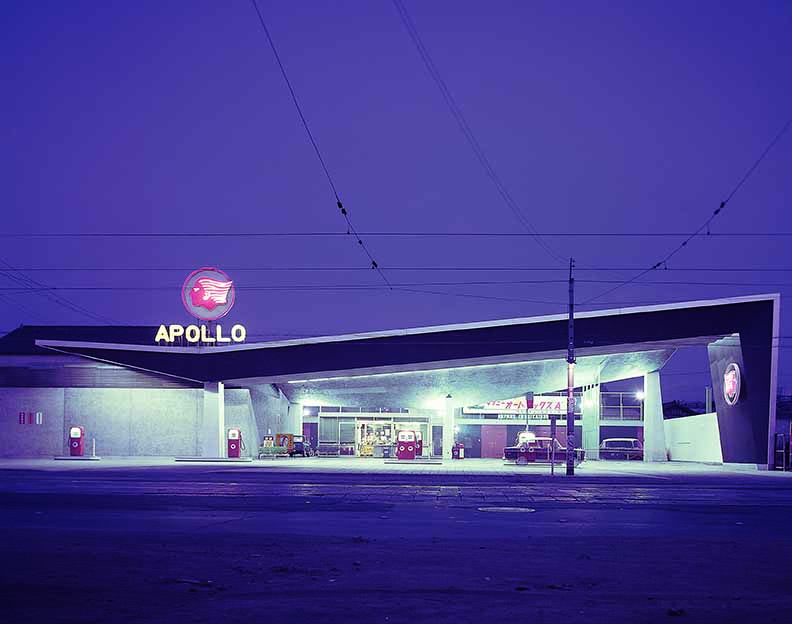
Several of them appeared in black and white films, later in color, fleetingly framed within the urban landscapes of Toei and Nikkatsu productions , as temples to rebel against, as in those of Wakamatsu and Terayama, or as imprints of glamorous exoticism, as in Scott’s Black Rain. Possibly of the book’s greatest merits is how it succeeds in conveying, without naming, the legacy of Brutalist and Metabolism architecture as movements of harmony, before expressions of self-identity found in the Asahi building, the Prada store in Aoyama, Hermes’ flagship store in Ginza, or the Aston-Martin showroom next to Hibiya Park became the norm.